Good intentions may be all but useless unless one takes a look at the whole before taking action. Such is the discussion about why the plan of the American Prairie Reserve is misguided. They fail to recognize that the prairies were not developed by bison alone, but also by migrating herds of elk and antelope. They also fail to recognize that both the instinct to graze as a herd as well as their instinct to migrate long distances has been dulled, if not removed from the way they have been run over the last 100 years. It would be possible for them to achieve their goals, but they must take the first step of recognizing that bison behavior of today is not the behavior which developed the prairies. This and more is discussed in this interview with me on the Working Cows Podcast.
Showing posts with label #Ranchingforprofit. Show all posts
Showing posts with label #Ranchingforprofit. Show all posts
Friday, May 10, 2019


Sunday, April 29, 2018
Side By Side Animal Impact/Vegetation Comparisons
All of these pictures were taken the same day, in the same pasture. There are only 38 cows and a bull (plus calves) which get adjusted once a week at the most (and have gone up to 3 months without being adjusted when I am out of the area.) These pictures show the difference herd impact and proper grazing can have on the land.


At first glance, this picture is only showing a few weeds and wildflowers. The area happens to be in

an area where I stopped the cattle on one of the times they were moved. If you look close at the ground, you will see it is a combination of a smooth surface which is crusted so that the rain runs off it, and areas where that crust has been broken by the cattle so that more water is absorbed. Looking a little more closely, you will notice that the vast majority of the plants are in the area where the crust has been broken. The line between where the cattle were stopped for a short amount of time and where they didn't cross is clearly marked by the green
The picture below to the right shows the difference between plants which have been grazed (somewhat) properly, and those which have been over rested. The grey grass in the background is dying due to over rest, and a lack of being grazed. The grass in the foreground was grazed late in the season, and taken a bit shorter than I would like, it is green and growing because it was grazed despite the fact there has been less than a half inch of rain in the last 5 months. If this area would have had enough animal impact, and been grazed evenly, ALL the grass in this picture would be green and healthy rather than being oxidized and dying.vegetation.
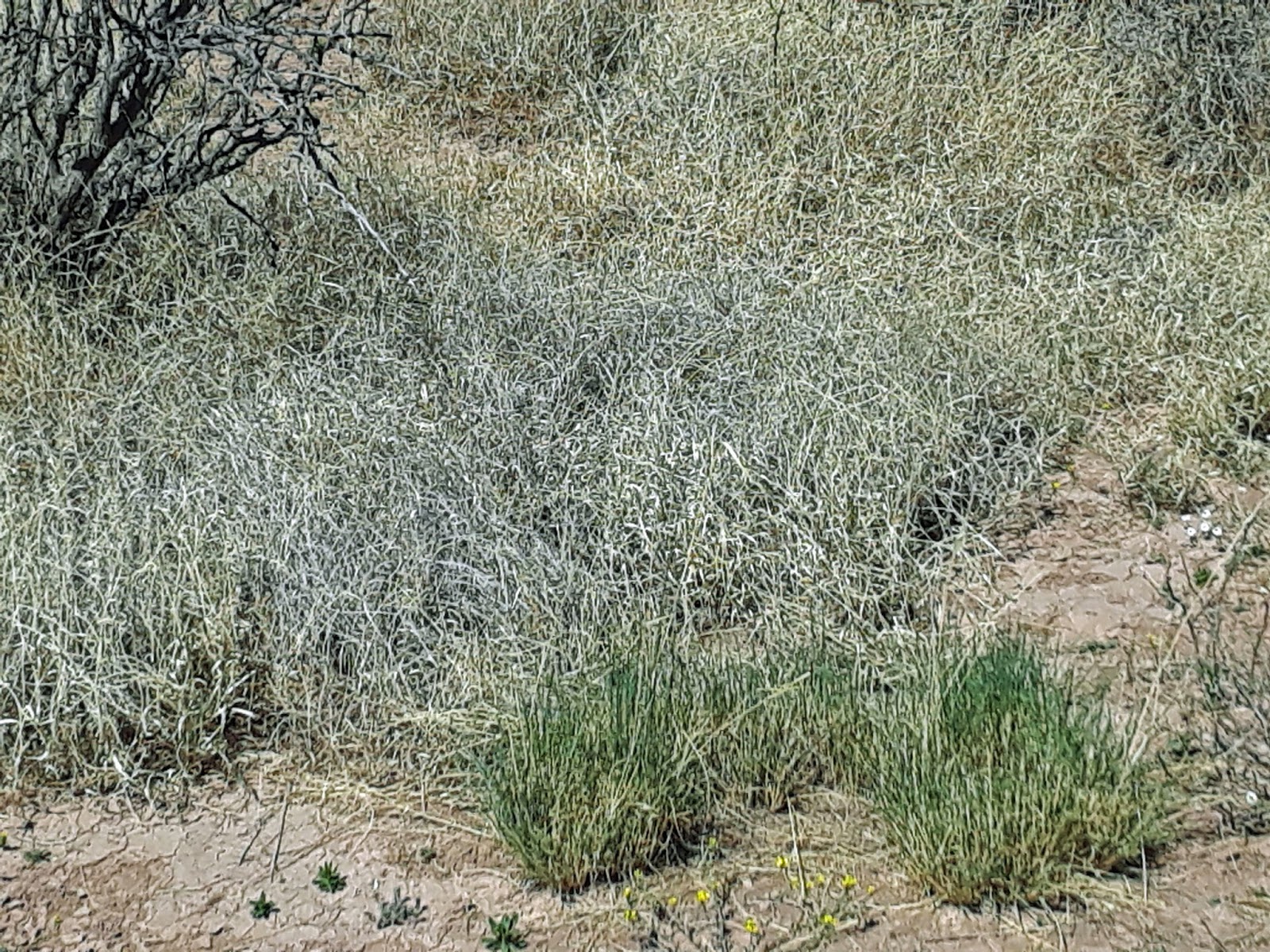

This grass was grazed at the right height and given enough recovery time. Notice how the dormant grass is a golden yellow (signifying it is healthy and alive rather than dead) and the new growth is nearly a foot tall.

This last picture is an area which the cattle worked as a herd last year and grazed it properly. Once again, the dormant grass is a vibrant yellow instead of being dull, gray, and dead. This has allowed the grass to green up and thrive a month or more earlier than under grazed or overgrazed areas, despite the lack of rain. In addition, the herd impact of breaking the top crust has allowed weeds to emerge and begin the healing process on the bare ground.
Over resting the ground is as bad for the ground as overgrazing, and set stock, or simple rotational grazing results in both extremes. For more resources on regenerating grass, visit the grass management resources page on Migratory Grazing
Monday, September 12, 2016
Holistic/Regenerative Grazing to Become a Requirement on Federal Grazing Leases?
A bill introduced into Congress last spring. shows
that holistic or other regenerative grazing methods may be required
before long as a condition to graze federal permits. As everyone "knows"
this is going to mean a lot of what I call "recreational fencing." The
reason I call it that is because the fencing isn't really necessary to
control where and when cattle graze. Actually leaving one or more
herders in the cattle isn't necessary either.
While call cattle herd animals we also think it is natural cattle instinct for them to graze apart. One of the unorthodox beliefs of those who claim the vast herd of bison, as well as the vast herds of grazing wildlife in Africa, is that these herds are controlled by predators. There are the same amount of predators at anytime of the year, so if predators were actually the control mechanism for herds to come together into the mega herds, they would be together year round. Instead they come together in times of plentiful feed and water ("mysteriously" coinciding with breeding season) and break apart in times of less feed and water. Basically these animals come together in times when competitive stress for feed and water is nonexistent, and break into smaller groups when they are forced to competing for feed and water.
Basically cattle are no different. Once you remove handling stress, and they do not have to compete for water, they will come together just as the wild herds do. By instilling this behavior in cattle it is possible to follow complex grazing plans in nearly any sort of terrain by simply taking them off of water each day (when they are ready to go back out to graze) and setting them on the path you wish them to follow. This not only eliminates the need for multiple small pastures, it also eliminates the one thing which causes poor animal performance in these systems, which is estimating the feed for a day, and using temporary fencing to hold them there. There will be times when you may need to change their grazing paths daily, and other times you may be able to let them go for several days. In riparian areas, you need to pick them up as they come to water and change where they will water, then when they are ready to go graze, send them on a new grazing path. Their proximity to each other will be as close together, or as far apart as forage dictates. The better the forage, the closer together they will be.
This short video will give you an idea of how much cattle behavior can change in as little as five days. While watching this, notice the mountains in the background. By using the effects of herd behavior, this rancher managed to graze these mountains at a high density the following winter, which resulted in the regeneration of two cool season grasses which were thought to be extinct in the area. Over the past ten years he has also reduced his grazing requirements from 90 acres per cow (with supplemental feeding for 5 months and weaning calves at 4 months) to only 25 acres per cow, eliminating all supplement but sea salt, and keeping his calves until they are 10 months old.
Basically cattle are no different. Once you remove handling stress, and they do not have to compete for water, they will come together just as the wild herds do. By instilling this behavior in cattle it is possible to follow complex grazing plans in nearly any sort of terrain by simply taking them off of water each day (when they are ready to go back out to graze) and setting them on the path you wish them to follow. This not only eliminates the need for multiple small pastures, it also eliminates the one thing which causes poor animal performance in these systems, which is estimating the feed for a day, and using temporary fencing to hold them there. There will be times when you may need to change their grazing paths daily, and other times you may be able to let them go for several days. In riparian areas, you need to pick them up as they come to water and change where they will water, then when they are ready to go graze, send them on a new grazing path. Their proximity to each other will be as close together, or as far apart as forage dictates. The better the forage, the closer together they will be.
This short video will give you an idea of how much cattle behavior can change in as little as five days. While watching this, notice the mountains in the background. By using the effects of herd behavior, this rancher managed to graze these mountains at a high density the following winter, which resulted in the regeneration of two cool season grasses which were thought to be extinct in the area. Over the past ten years he has also reduced his grazing requirements from 90 acres per cow (with supplemental feeding for 5 months and weaning calves at 4 months) to only 25 acres per cow, eliminating all supplement but sea salt, and keeping his calves until they are 10 months old.
Between now and the 10th of October I will be producing a professionally filmed and edited, drone based video to show how the process of rebooting herd instinct is accomplished. I will describe the various techniques to turn cattle with indirect pressure to reduce stress on the cattle, then demonstrate each one several times, with the drone following at an angle where you may see the exact angles being used, as well as the animal's behavioral response. The drone will then follow me through the process of rebooting herd instinct into 300 head of yearlings so you can track the behavioral changes in the herd throughout the process.
In order to raise the funds for production, I have set up a gofund account to take pre release orders on this video. At the current time, all contributions to this fund of $30 and over will receive a copy of the dvd as soon as editing and captioning are finished. To get your copy now, follow the link below.
https://www.gofundme.com/2et8s5as?brandedshare=1&donorname=Jervoise+Station+Crew
Saturday, August 27, 2016
Fundraising For Drone Based Video
Using the right grazing management can bring back your grass to where it was 100 years ago. This is made easier using stockmanship methods which allow you to follow grazing plans without using fences.
Several of the ranchers in this video use are using the stockmanship techniques I taught them in regenerating these ranches as it allows them to concentrate their herds where it is nearly impossible to build fence.
Currently trying to raise money to produce a professionally filmed, drone based, video of these techniques on the Circle Ranch in Hudspeth county, Texas. In order to make the information available to as many as possible, there will be versions in both English and Spanish. Both versions will be available for free in segments on YouTube, as well as for sale on Amazon in all available formats.
A $30 donation will get you a copy of the cd when it is finished! Corporate and non-profits partnering with me on this video will be able to get as many as they want in either version at cost plus shipping, plus be acknowledged in the credits of the video. (please contact me direct for information on partnering with me on the video) https://www.gofundme.com/2et8s5as
Tuesday, February 9, 2016
How Removing Grazing Destroys Grasslands
Despite Alan Savory's Ted talk, there are still a lot of disbelievers out there promoting the removal of livestock to conserve the land. I've been in a running discussion with a local ranch trying to convince them they needed to start grazing before they destroyed some large areas of grass. Last year it was obvious that large areas of grass were at the point where they were going to oxidize and die, but they would not believe it. Last week I visited the ranch and took this video. There are several thousand acres in this same condition.
Wednesday, December 16, 2015
On Ranch Stockmanship Training
Tired of sending your employees to stockmanship schools where they only use videos to teach? Try having them learn at home, with your cattle, under the conditions and situations they will actually be working under.
Thursday, June 18, 2015
Multi-paddock VS Herd Instinct Effeciency/Cost Comparison
This weeks post ties in with my last post of How do you know you are doing a good job? Make no doubt about it, multi-paddock grazing greatly improves the soil while increasing your carrying capacity and your bottom line. Just how does multi-paddock stack up to building and using herd instinct in your cattle?
The claim is that moving fences is easy, and in many cases, only takes a few minutes. At roughly 3:58 in this video, the man explains that it takes him 18 minutes to
run the wire for his electric fence, then he has to move the cows. Later
he says he is doing this up to five times a day. That may not sound like much until you start adding up the time.
That is an hour and a
half a day or 45 hours a month during the growing season. Where he is,
that is roughly 5 months,or 225 hours. Of course this does not take into
account drive time, or fixing fence, or the cost involved in posts
wire, chargers and moving portable water points etc.
The second question is always "What about back grazing?" Why would there be? Cattle prefer fresh feed. In small pastures they will start on the perimeter and graze around. When they go to water, they will go back to where they left off to resume grazing. Once the have grazed around the pasture, they move in to the next strip on their own, continuing to follow the fresh feed, until there is no more fresh feed. At that time, simply move them into the next field.
For more information and videos, my website.
Monday, June 8, 2015
How Do You Know You Do A Good Job?
If Bud Williams was even half right with his opinion that "95% of the people who work cattle for a living, have no idea how cattle really work" would mean that roughly half of the ranchers and hired hands have never seen cattle worked right. With that in mind, how sure are you that you are really doing a good job handling cattle? If you haven't seen cattle worked in the right way, then how can you get a clue you aren't doing it as well as you could?
The following is a short list of common problems. If you don't have any of these problems, congratulations, you are doing an excellent job. If you have fewer than four of these problems on a regular basis, you are doing a fairly good job. If you have more than half of these problems, you may be getting the job done, but thinking you are doing a good job is only your ego talking.
1) If you blame the cattle for how they react to you
2) Your cattle won't stay where you put them
3) You have a lot of herd quitters
4) Cattle won't stay paired when you are driving them
5) Cattle are wild in the pens
6) Cattle won't go by you when sorting
7) You need rattle paddles or flags to sort cattle
8) Cattle can't find the gate
9) Cattle want to run off instead of going into the pens
10) You have areas where it is a foregone conclusion the cattle are going to give you a problem
The first step in getting better at the job is realizing that nearly everything they do is a direct response to how we are handling them in that situation. The second step is realizing that it is often possible to get the reaction you want out of a cow without putting pressure directly on the cow, and learn how to get the desired response without applying more pressure. There are plenty of websites and videos on the internet to help you get started on the right path.
Another difficult area for ranchers to really know how good a job they are doing is in grass management. Once again, if you are only comparing your pastures to your neighbors, chances are you have no idea of how much grass you could really have. NRCS has drastically changing their grazing recommendations in the last few years as demonstrated in this video.
The point to all of this is we are all biased to think we are doing a good job on the ranch. But how much room do we have to drastically improve the quality of our work?
It is possible for most ranches to increase the pounds of beef they produce per animal by simply changing the way they handle their cattle. This actually requires less labor than what they are doing now to increase their profits.
The majority of ranches could also increase forage production enough to increase stocking rates by changing how they graze. While the average ranch reduced stocking rates and fed more supplement, other ranches managed to actually increase forage enough to increase stocking rates while feeding no supplemental feed.
While many ranches judge their overall performance on average weaning weights, the most successful ranches strive for the most pounds of beef marketed per acre. Do you still think you are doing a good job on your ranch? If you think you have room for improvement, visit Natural Cattle Handling for more information as well as other educational links.
The following is a short list of common problems. If you don't have any of these problems, congratulations, you are doing an excellent job. If you have fewer than four of these problems on a regular basis, you are doing a fairly good job. If you have more than half of these problems, you may be getting the job done, but thinking you are doing a good job is only your ego talking.
1) If you blame the cattle for how they react to you
2) Your cattle won't stay where you put them
3) You have a lot of herd quitters
4) Cattle won't stay paired when you are driving them
5) Cattle are wild in the pens
6) Cattle won't go by you when sorting
7) You need rattle paddles or flags to sort cattle
8) Cattle can't find the gate
9) Cattle want to run off instead of going into the pens
10) You have areas where it is a foregone conclusion the cattle are going to give you a problem
The first step in getting better at the job is realizing that nearly everything they do is a direct response to how we are handling them in that situation. The second step is realizing that it is often possible to get the reaction you want out of a cow without putting pressure directly on the cow, and learn how to get the desired response without applying more pressure. There are plenty of websites and videos on the internet to help you get started on the right path.
Another difficult area for ranchers to really know how good a job they are doing is in grass management. Once again, if you are only comparing your pastures to your neighbors, chances are you have no idea of how much grass you could really have. NRCS has drastically changing their grazing recommendations in the last few years as demonstrated in this video.
The point to all of this is we are all biased to think we are doing a good job on the ranch. But how much room do we have to drastically improve the quality of our work?
It is possible for most ranches to increase the pounds of beef they produce per animal by simply changing the way they handle their cattle. This actually requires less labor than what they are doing now to increase their profits.
The majority of ranches could also increase forage production enough to increase stocking rates by changing how they graze. While the average ranch reduced stocking rates and fed more supplement, other ranches managed to actually increase forage enough to increase stocking rates while feeding no supplemental feed.
While many ranches judge their overall performance on average weaning weights, the most successful ranches strive for the most pounds of beef marketed per acre. Do you still think you are doing a good job on your ranch? If you think you have room for improvement, visit Natural Cattle Handling for more information as well as other educational links.
Friday, August 8, 2014
Why Climate Change Scientists Are Clueless
Like Chicken Little yelling "The sky is falling" climate change scientists are giving reasons behind the phenomenon which are largely unrelated to the actual causes. One of the false flags behind "global warming" is greenhouse gases. They may contribute a small amount, but in reality it is the lack of grasslands which it the biggest contributor.
Early day explorers described the vast majority of western America as a "sea of grass." While there are no stories describing how settlers livestock died of starvation, there are plenty of livestock perishing from a lack of water. Today much of this land has become bare ground because of the lack of proper animal impact. To demonstrate just how much the lack of grass cover reflects heat back into the atmosphere, I checked the air temperature, then checked the temperature on a patch of grass, and also a path of bare ground.
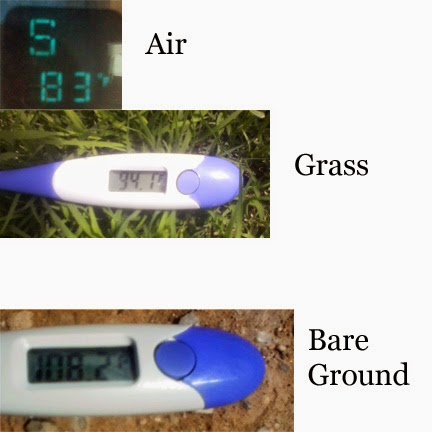 Notice that the grass covered area is approximately eleven degrees warmer than the air while the bare ground is twenty five degrees warmer than air temperature.
We now have millions upon millions of acres just in North America which have gone from lush grasslands to bare ground and brush in the last 130 years. Add to this the millions of acres of grasslands which have been replaced with buildings and pavement, what is really the cause of global warming? Greenhouse gases (which could be converted to oxygen by grasses) or the depletion of the world's grasslands?
Now lets examine rising oceans. According to scientists, the oceans are rising as a result of the polar ice caps melting. The reason the ice caps are melting, say scientists, is because of rising temperatures. Is this actually the case, or are the ice caps melting due to the ocean levels rising? Once again, the sources of the problem are ignored.

The above picture was taken after a thunderstorm dropped under a half inch of rain. As one can see, rather than go into the ground, much of the water is running off. When a thunderstorm drops two inches and half of it is running off rather than going into the ground, that equals 27,154 water per acre returning to rivers and into the ocean. For every thousand acres this amounts to 27,154,000 gallons of water returning to the ocean, or trillions of gallons of water world wide returning to the sea rather than soaking into the ground.
Adding to the contribution of waters returning to the sea rather than soaking into the ground, is flood control. Water which would flood deltas and return some of it into the ground, are now kept between dykes and returned to the ocean. How many hundreds of trillions of gallons of water which should be returned to the ground are now channeled directly into the ocean by the Mississippi River flood control system?
It becomes fairly obvious that the real culprit of rising oceans and temperatures is not greenhouse gases, but depletion of grasslands preventing precipitation from cycling into the ground to replenish ground water, and not insulating the ground.
Scientists blame depletion of grasslands on "overgrazing." Keep in mind that this same land which now supports under 90,000,000 cows once supported nearly 300,000,000 bison in addition to millions each of antelope, elk and deer. The problem is not too many animals on not enough land, but in how those animals are grazed.
Ranchers who have abandoned traditional grazing methods and changed to holistic grazing have actually reversed desertification and restored grasslands. By changing his grazing methods, the rancher below was able to restore the grass on land which was nearly bare to what you see in the picture below. This land has little to no run off because the grasses slow the water and allow it to penetrate the ground.
 Mainstream scientists need to get a clue, not only to the real causes of climate change and rising oceans, but in the science behind restoring grasslands to their original state.
Early day explorers described the vast majority of western America as a "sea of grass." While there are no stories describing how settlers livestock died of starvation, there are plenty of livestock perishing from a lack of water. Today much of this land has become bare ground because of the lack of proper animal impact. To demonstrate just how much the lack of grass cover reflects heat back into the atmosphere, I checked the air temperature, then checked the temperature on a patch of grass, and also a path of bare ground.
We now have millions upon millions of acres just in North America which have gone from lush grasslands to bare ground and brush in the last 130 years. Add to this the millions of acres of grasslands which have been replaced with buildings and pavement, what is really the cause of global warming? Greenhouse gases (which could be converted to oxygen by grasses) or the depletion of the world's grasslands?
Now lets examine rising oceans. According to scientists, the oceans are rising as a result of the polar ice caps melting. The reason the ice caps are melting, say scientists, is because of rising temperatures. Is this actually the case, or are the ice caps melting due to the ocean levels rising? Once again, the sources of the problem are ignored.
Adding to the contribution of waters returning to the sea rather than soaking into the ground, is flood control. Water which would flood deltas and return some of it into the ground, are now kept between dykes and returned to the ocean. How many hundreds of trillions of gallons of water which should be returned to the ground are now channeled directly into the ocean by the Mississippi River flood control system?
It becomes fairly obvious that the real culprit of rising oceans and temperatures is not greenhouse gases, but depletion of grasslands preventing precipitation from cycling into the ground to replenish ground water, and not insulating the ground.
Scientists blame depletion of grasslands on "overgrazing." Keep in mind that this same land which now supports under 90,000,000 cows once supported nearly 300,000,000 bison in addition to millions each of antelope, elk and deer. The problem is not too many animals on not enough land, but in how those animals are grazed.
Ranchers who have abandoned traditional grazing methods and changed to holistic grazing have actually reversed desertification and restored grasslands. By changing his grazing methods, the rancher below was able to restore the grass on land which was nearly bare to what you see in the picture below. This land has little to no run off because the grasses slow the water and allow it to penetrate the ground.
Subscribe to:
Posts (Atom)
Using herd instinct to his advantage, and increasing his pastures to 100 acres would give him roughly 20 days feed. Time spent to have cattle graze in exactly the same manner would amount to going out once a day to check on the cattle by simply going to the front and having the cattle walk past him would be roughly 20 minutes a day.or the equivalent of 5 work weeks in other professions... Or one and a quarter month's vacation. Even figuring his time at only $10 an hour using herd instinct would save him $2,000 over the course of the growing season in time alone.
So the first question on everyone's mind is "What about herd density?" Not to worry, cattle behaving as a herd will graze at least as tight as when forced into it by fencing, if not tighter as in the following picture.