Showing posts with label regenerative grazing. Show all posts

Tuesday, December 11, 2018

Using The Unseen Potential

Even when people believe they could change how they graze to regenerate their pastures, they believe that costs to make the changes in water infrastructure are insurmountable. Often this can be overcome in part by simple modifications.

 Many operations can simply consolidate their current water points to be able to run their cattle as one herd. (Santa Maria Cattle Company, out of Chihuahua City, Mexico has one 4,000 acre pasture they have been regenerating grass with only one water point, and one division fence.) In instances where there are two or more water points across the fence from each other, simply incorporating them into a single water lot will increase the number of cattle that can be run in a single group. 

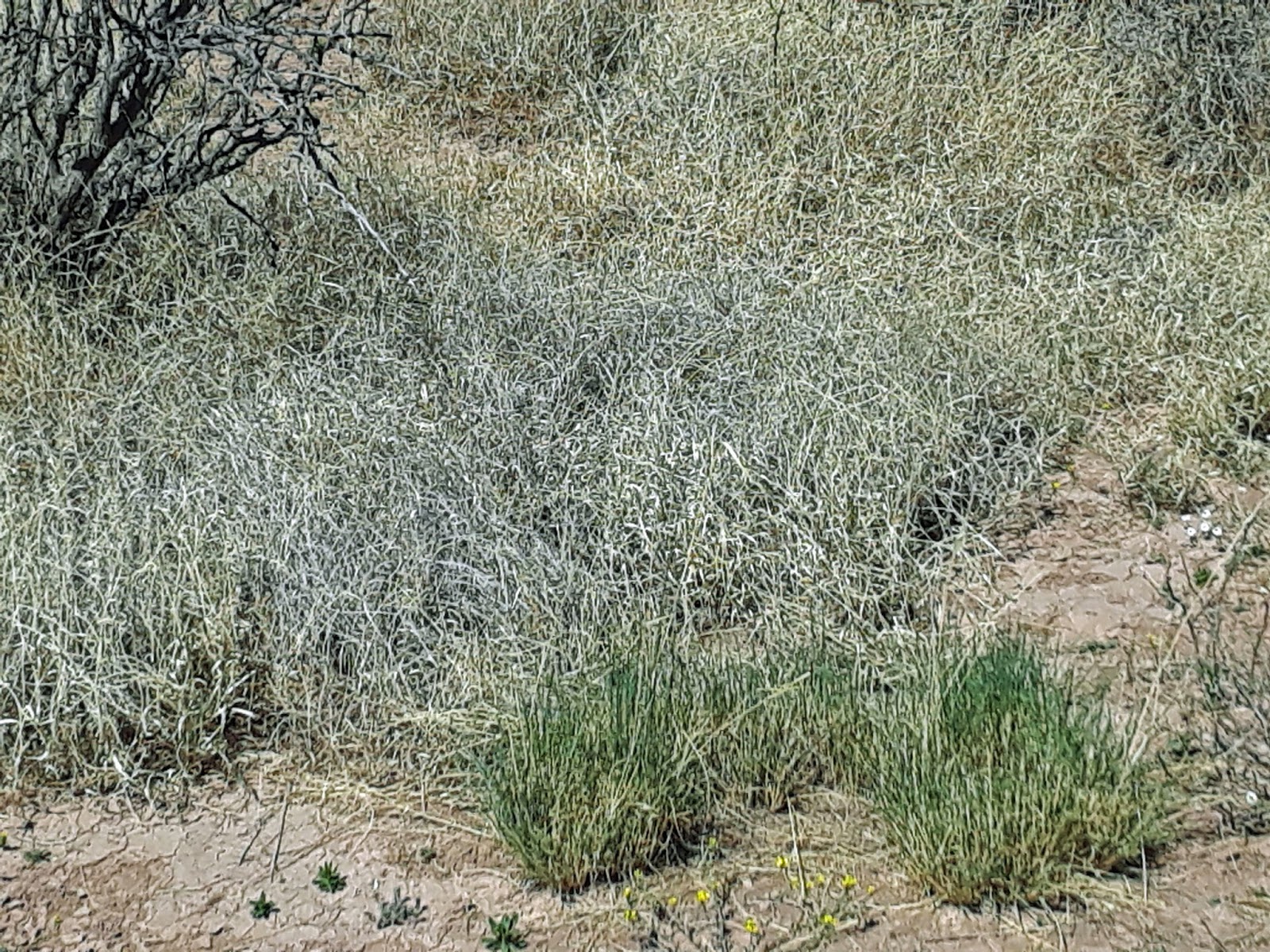
 Another thing which goes unseen is the amount of feed which cattle ignore. There are many plants which our fathers or grandfathers depended on for winter forage which (thanks to generations of purchased supplements) that (most of) our cattle ignore them and we don't recognize them. Amazingly, in most cases (thanks to desertification of grass) these plants are more prolific now than they were back when our grandfathers depended on them. The following two pictures are looked at as unproductive by this ranch,  yet it is an opportunity waiting to be utilized.


The cattle in this picture were ones missed in the gather because they were buried in the brush in the top picture, rather than out in sparse grass like the rest of the cattle in this pasture were doing.
The piece of brush this cow is eating is one of four different kinds of brush they were eating. Doesn't look like much, but judging by the condition of the cattle, it must be pretty good feed...which is being all but ignored by most of the cattle and rancher alike.

These three things combined, being chronically understocked, ability to combine water points to run cattle in a single group, and ignored forage plants add up to the potential to not only begin a regenerative grazing program with little expense, but to do it at an accelerated rate.

Rebooting herd instinct in your cattle after combining your water points automatically widens their diet to include the nutritious woody plants and weeds they now ignore in a way which stimulates soil biology and grass. You are now grazing more forage in each pasture, as well a more acreage in each pasture and able to increase your stocking rates.

At this point, rather than buying cattle, you can increase your cow numbers and accelerate the process by leasing pasture to yearlings. With pasture rates for yearlings running at $20 per head, per month and above, you are left with (after deducting for extra labor and water) you are left with an extra $15,000 a month (or more) for water infrastructure, in addition to  sub-soiling or bale feeding to accelerate the soil and grass regeneration process.  

By changing focus, the unseen potential of your ranch can become more obvious, and regeneration of your soil and forage base becomes a bit more simple.


Saturday, October 20, 2018

Paradigms, Peregrine Falcons, and The Politics of Scientific Evidence

I've always loved acquiring knowledge, but learned at an early age that "facts" spread by research scientists and schools are not always true. Unfortunately, in order to succeed in school, and later in life, you aren't allowed to question the facts. You are indoctrinated to believe that any peer reviewed research is correct...but

You may have read the reading right, but are you sure the one who wrote the reading, wrote the reading right?

When I was in 8th grade there was a picture of a Peregrine falcon on the front page of the paper with a headline declaring that there were only four such birds left in the state of California. This surprised me as we had four of them flying around our house, and I was unaware that anyone had been in the neighborhood to count them. Curious, I called an uncle (who was a federal game warden) who informed me that I was mistaken, and the only such birds in the state were nearly 200 miles away, on the coast. A few weeks later he was visiting and admitted that the birds we had been watching were indeed Peregrine Falcons. The population of this bird had just increased by 100%, yet no public mention was made. Odds are, there were even more of them.

You may have read the reading right, but are you sure the one who wrote the reading, wrote the reading right?

The next year, the first chapter of my biology book stated that browsing animals preferred brush and twigs while cattle preferred grasses and legumes. Naturally (for me) I questioned the teacher about it the next day, because if this were true, deer wouldn't some out at night to graze on lawns and alfalfa fields while cows wouldn't be browsing on acorns, pine-nuts and brush. Of course the teacher corrected me and I received a "D" on my first test because my answers (based on personal observation) didn't agree with what was in the textbook.

You may have read the reading right, but are you sure the one who wrote the reading, wrote the reading right?

The conundrum of scientific "fact" not matching up to observations didn't stop there. A biologist who allegedly conducted a count of deer and elk on a ranch where I worked, concluded that there were no deer or elk on the ranch. I offered to show him two herds of does totaling over 70 head (not including fawns,)  at least a dozen mature bucks, not to mention a couple of small elk herds. Once again, he filed his report and the lie became truth. This was a smaller scale than the "endangered" desert tortoise which removed cattle from grazing permits (although, 70 miles away, in Las Vegas, construction companies had crews following earth moving equipment rescuing said "endangered species" by the tens of thousands...

You may have read the reading right, but are you sure the one who wrote the reading, wrote the reading right?

Now we come to holistic/regenerative grazing. As soon as Alan Savory claimed cattle could be used to regenerate grasslands, academia rushed to disprove it. Although he and others reclaimed millions of acres using his, or similar methods, academia continued to "disprove" his methods, often publishing new "peer reviewed" studies which were basically compiling "evidence" from other studies. For at least the last 80 years, the science behind range management has been peer reviewed opinion that degrading range conditions were the result of over grazing, with no thought given to plants dying from being under grazed, or consideration to the biology of the soils supporting the flora of the range.

Finally in the last few years some scientists are breaking out of the mold and discovering that holistic/regenerative grazing not only works, but that the science behind it is directly tied to the symbiotic relationship plants have with the biology in the soil in which they grow. The science which, so many have base their grazing paradigms on was wrong... Science is dead....Long live science.

You may have read the reading right, but are you sure the one who wrote the reading, wrote the reading right?

Now we come to the current feedlot system of producing beef. Science claims that it is the most efficient model of beef production. These claims are based upon the fact we are producing more pounds of beef with fewer resources. Once again, science has the peer reviewed studies, complete with tons of data to "prove" they are right. On a limited basis, without consideration to lands reverting to desert and bare ground, they may be right. However to reverse desertification (which is happening from Mexico, through the United States and into Canada) we need more cattle on the land. By staying with the present model, we are only accelerating the problem, which in a larger sense, isn't efficient at all. Ranchers who have successfully implemented regenerative grazing by any of it's names have often quadrupled their stocking rates while nearly eliminating runoff from precipitation (not to mention recovering dry springs, creeks and seasonal rivers.)

     You may have read the reading right, but are you sure the one who wrote the reading, wrote the reading right?

Who knows, perhaps I haven't written the reading right. Perhaps the range management science of the last 80 or so years, prescribing burning, herbicides and destocking have nothing to do with the spread of invasive plants, lowering ground water tables, and degradation of grass. But then again, someone once said that the definition of insanity was doing the same thing over and over and expecting different results.

For more information visit my website.

Thursday, August 30, 2018

Controlling Weeds Through Instinctive Migratory Grazing

Weed control. Radio advertisements in farm and ranch country are full of ones pushing weed control through chemical herbicides. Social media boards are full of discussions on how to control weeds by non-chemical methods including burning, grubbing and ripping. Often, at the same time ranchers are trying to figure out how to control the weeds, they are spending money on supplemental protein.  What if these weeds that "cattle won't eat" are the solution to reducing supplemental feed outputs?

As it turns out, the same stresses we have placed on our cattle that prevent them from acting as a herd, has also narrowed their natural dietary intake. As we change our stockmanship methods to allow the rebooting of herd instinct, cattle widen their diet, often before herd instinct is completely rebooted. A partial list of plants they begin to eat is common ragweed, ironweed, sumac, locust, thistles, blackberry bushes, chicory, and wild roses. The cattle don't just nibble on a few plants, but actually graze them hard.

The following picture is from a herd in Kansas which recently had it's herd instinct rebooted. The rancher call these "peppermint weeds." Prior to having their herd instinct rebooted, cattle wouldn't walk through these weeds, let alone graze them. Rather than grazing through spread out as we are used to, they migrated through as a herd, roughly consuming the top half of the plants on the right side of the picture.


Another weed this rancher has a problem with is hemp.  It was at a coarse stage and the cattle were not interested in grazing it. However, when the cattle were beginning to lie down for their morning rumination,  we spent a short time (perhaps 30 minutes) and drew them into a stand of hemp. After that one time, their preferred spot for their morning rumination is in the hemp. Even though they may not be eating it, they are trampling it down so that the grasses are able to start competing, as in the picture below (the hemp in this spot was head high to a man horseback.)


Other than one short session to entice the cattle to ruminate in the hemp, nothing was done to encourage the cattle to trample it, or browse the "peppermint" weeds. The cattle just started doing it on their own as soon as their stress levels were reduced enough for herd instinct to begin rebooting. The only thing that changed was the stockmanship methods of the man handling the cattle. The rest of it was simply the changes it allowed in the attitude of his cattle. They are working, doing weed control for the rancher, without spending a dime on chemicals, fencing or fire. As an added bonus, he is reducing his outputs on supplemental feed and was able to discard part of his water infrastructure.

For more information, visit http://migratorygrazing.com/


Saturday, August 25, 2018

Forensic Grazing Study

 Looking to the past to determine what we do in the future is as important years into regenerative grazing programs as it is in the beginning of them. When converting from conventional or rotational grazing to regenerative grazing, it is important for a person to recognize the grazing behavior that has caused their forage to degrade. It helps them to understand both the causes of the degradation as well as the cure. For those years into a program, it helps them identify areas which need changes in impact. A recent trip where I visited a ranch considering the change, and another which made the change several years ago are good examples.

The first ranch was starting to make the change, recognized the fact their pastures were going backwards, but weren't sure why. Rather than doing a grass survey, we did a Forensic Grazing Study. Rather than looking at the amount of grass, we examined what the grazing patterns had been under their conventional rotation. It was easy for them to see what areas had been over grazed as well as what areas had been under grazed. At the same time, this made it easy for them to understand the changes needed to begin regenerating the pasture, and how it could be done without added outputs for fencing or water (By rebooting their herd instinct and practicing IMG, they will actually be able to reduce their number of water points.)

The second ranch had been using a fencing system for several years. As the country was hilly, and fairly steep in areas, the cells were larger than normally used in these systems (500 acres and up.) While they had made dramatic progress over the last few years, the herd of 700 cows has not impacted the paddocks evenly. Cutting back and forth across the paddocks we were able to identify areas which had barely been impacted, along with areas were grasses were still receiving that second bite to retard plant recovery. There were some areas where there was oxidized litter preventing rain from reaching the ground, and some areas which had reached a plateau of recovery and starting to regress.

All of these things were discovered by crisscrossing the pasture horseback rather than driving through and conducting a grass survey.  His choices to improve his grazing distribution were to either build and maintain more fence, or reboot herd instinct in his cattle. That way, if cattle miss a spot while migrating around the pasture, he will be able to easily spot graze the places which need the additional impact without the headache of adding more "recreational fencing."

For more information, visit http://migratorygrazing.com/about 

Click to order the Stockmanship 101 dvd


Sunday, April 29, 2018

Side By Side Animal Impact/Vegetation Comparisons

All of these pictures were taken the same day, in the same pasture. There are only 38 cows and a bull (plus calves) which get adjusted once a week at the most (and have gone up to 3 months without being adjusted when I am out of the area.) These pictures show the difference herd impact and proper grazing can have on the land.
At first glance, this picture is only showing a few weeds and wildflowers. The area happens to be in 
an area where I stopped the cattle on one of the times they were moved. If you look close at the ground, you will see it is a combination of a smooth surface which is crusted so that the rain runs off it, and areas where that crust has been broken by the cattle so that more water is absorbed. Looking a little more closely, you will notice that the vast majority of the plants are in the area where the crust has been broken. The line between where the cattle were stopped for a short amount of time and where they didn't cross is clearly marked by the green  


The picture below to the right shows the difference between plants which have been grazed (somewhat) properly, and those which have been over rested. The grey grass in the background is dying due to over rest, and a lack of being grazed. The grass in the foreground was grazed late in the season, and taken a bit shorter than I would like, it is green and growing because it was grazed despite the fact there has been less than a half inch of rain in the last 5 months. If this area would have had enough animal impact, and been grazed evenly, ALL the grass in this picture would be green and healthy rather than being oxidized and dying.vegetation.
This grass was grazed at the right height and given enough recovery time. Notice how the dormant grass is a golden yellow (signifying it is healthy and alive rather than dead) and the new growth is nearly a foot tall. 


This last picture is an area which the cattle worked as a herd last year and grazed it properly. Once again, the dormant grass is a vibrant yellow instead of being dull, gray, and dead. This has allowed the grass to green up and thrive a month or more earlier than under grazed or overgrazed areas, despite the lack of rain. In addition, the herd impact of breaking the top crust has allowed weeds to emerge and begin the healing process on the bare ground.
Over resting the ground is as bad for the ground as overgrazing, and set stock, or simple rotational grazing results in both extremes. For more resources on regenerating grass, visit the grass management resources page on Migratory Grazing

Tuesday, May 16, 2017

How Important is "Non-selective Grazing?"

Many of the grazing gurus of the planned grazing methods make a big issue over needing cattle to graze in a non-selective manner. I have to admit, I've done my share to add to the confusion, so now it is time to (try) and clear up the muddy waters.

Much of our feeling that selective grazing is bad is due to the ultra-selectivity used by cattle in a set stock situation. They get so selective that they go back and re-graze individual plants they grazed a couple of weeks earlier, so that those plants never get a chance to fully recover, while they completely ignore plants of the same variety only inches away. As a result, fewer plants are able to reach some semblance of a full recovery.

The cycle starts again the following growing season with those plants which "fully recovered" greening up first, followed by the surviving overgrazed plants, with those which were not grazed greening up last.  These  plants which were not grazed the previous year will very likely go un-grazed again and begin to oxidize and slowly die, a blade or two at a time.  The cycle repeats with plants being either over grazed or under grazed until weeds start appearing as the grass dies off.

While this overly selective grazing is a bad thing, a certain amount of selective grazing is actually necessary. Different grasses and browse plants mature and are ready to be grazed at different times. In our efforts to mimic the wild herds we have forgotten this aspect, as well as the fact that the large wild herds have always come together and fallen apart depending on the time of year, and abundance of feed and water. While high animal density and non-selective grazing is beneficial while grazing irrigated pasture, under range conditions we need to know when to use it, and have the flexibility to to adjust for those times when, nutritionally, the cattle to be highly concentrated or slightly spread out to take advantage of the higher quality forage which may not be highly concentrated, especially on desertified, degenerated rangeland.

A good example would be a pasture which has a large stand of tabosa or alkali sacaton in part of it while other parts of the pasture is made up of a variety of sparse grasses and browse. I order to get optimal nutritional benefit of the tabosa and alkali sacaton, the cattle will need to be highly concentrated. In conditions where there is a large mono culture (or a wide diversity of plants ready to be grazed) we are looking for, and need them to practice non-selective grazing.

In these conditions, if their herd instinct has been rebooted, they will close together in strips. Unlike when they are being forced into non-selective grazing with fences, the cattle will not graze to the ground, but leave half to two thirds of the plant. Leaving half to two thirds of the plants allows for faster recovery of the plants, and overall, more animal grazing days per acre, and a higher average daily gain on cattle.

Conversely,  when the cattle are grazing a minimal pasture it is highly unlikely that one will be able to accurately judge the amount of feed the cattle will receive.  There is a 90%+ probability that cattle being forced into non-selective grazing under these conditions will lose weight instead of gain, even if protein supplements are added.  Rebooting herd instinct and placing cattle to migrate these marginal areas will allow them to select enough of the plants they need to maintain condition while making enough impact to begin regenerating the soil and grass. Even if feed density requires that the cattle migrate through fifty or even a hundred feet apart, it is still more than enough impact to stimulate the microorganisms in the soil and new forage growth.

In nature, the "large herds of herbivores" we are trying to mimic only occur for a short amount of time each year; when there is enough grass and water for the herds to habitat in an ultra high density. The rest of they year they are scattered to fit feed and water availability, while selectively grazing plants with the highest nutritional value. In nature, availability of water will play at least a big of factor in herd size as feed. By providing an adequate water supply year round, we are allowing them to stay closer together, actually creating more positive animal impact to the soil biology than in nature.

By allowing cattle to graze selectively while migrating through pastures during the dormant season, we are actually creating the conditions to regenerate cool season browse and grasses. At the same time, rather than forcing them to graze non-selectively, your cattle come closer to meeting their nutritional requirements, lowering, or even eliminating the need for supplemental feeding.


Determining when you need the cattle to practice non-selective grazing, or spread out and graze selectively is simple once their instinct to act as a herd is rebooted. They will tell you what is needed as they are grazing. All you have to do is place them on their grazing path and they will instinctively do the rest on their own as you migrate them through your grazing plan.


Saturday, February 25, 2017

Booking Dates for 2017 Low Stress Stockmanship Schools

     Unlike most other low stress stockmanship schools, these are designed to let the students see, and take part in changing cattle behavior from grazing in small groups, to grazing together as a herd. This means the schools are five days long, At the end of the school, everyone has enough of a grasp on the different ways to start, turn and stop cattle with the least amount of stress possible.  
     
The days begin by saddling up and being in the cattle shortly after sunup and not leaving them until after they have been placed on their afternoon grazing placement. Between discussion, demonstration, doing, observing the attitude, behavioral changes and discussing that, students generally achieve enough understanding to actually start applying it when they go home.

  Because of the intensity of the classes, and the fact we are holding them in the pasture, rather than a smaller more controlled area, class size is limited to ten riders. Experience (in both attending and holding schools) has taught me it isn't a good idea for managers and owners to send employees without attending themselves. Too often cowboys feel they are being forced to learn something which they feel they already know. By management also attending, they are leading by example, which helps their crew want to learn, and allows management to know if the crew is correctly performing the stockmanship changes. 

If you are interested in hosting a school in Mexico, contact Pedro Dominguez on Facebook. For schools in the USA and other countries email me. By inviting other ranches to attend, the overall cost will often be lower than attending a two day school with no hands on experience. For more information on what the methods are, visit my website or order my stockmanship video on Amazon. In the meantime, enjoy the teaser and trailer to the video below to get an idea of what you will learn in the school.