While sometimes frustrating, I peruse through a lot of articles and videos on stockmanship, not for the education as much as trying to figure out how to describe things I do different. In doing so I came across a statement by one of the better known low stress stockmanship instructors which set off the old light bulb.
"Cattle don’t perceive there is or will be a release of pressure. Or pressure is coming from multiple spots around them at the same time."
We are so busy figuring out when to apply or release pressure that we don't recognize that cattle are continually looking for the release of pressure, and when they don't recognize it, react to us in ways we consider "wrong." To this (and in response to "pressure is coming from multiple spots around them" ) we need to add There are times we are placing pressures on cattle without realizing it.
We seldom acknowledge the fact we are neither solely a predator or solely a prey animal. This becomes a problem when we are working cattle because (no matter how much we try not to) we focus on what reactions cattle should have from the point of a predator, and not a prey animal. As such we don't recognize behaviors such as quitting the herd or refusing to go through a gate as the animal responding to too much pressure and recognizing where the release from pressure is.
Our reaction is that we need to get ahead of them to "get their eye" and put enough pressure on them to turn or stop them. We forget that the general rule of cattle slowing down when we are going in the same direction only works if and when our position isn't in the predatory mode of pursuing prey.
When it comes down to it, humans react much the same way. We react to having too much pressure in a variety of ways. This can vary from being indecisive, to becoming agitated and angry, to freezing up like a deer in the headlights. Just like a cow, our prey instincts kick in and we try to get away from it in various ways. We may freeze like a deer in the headlights, or we may be like a bull on the fight and go on the attack...or we may be like the cow in the gate and just leave.
This tendency to looking for a release from pressure is why stockmanship methods using indirect pressure works so well. For instance, when trying to force a cow out of the feed pen and into the alley, the cow is concentrated on the source of pressure while thinking the release is where you picked it up from. As such it doesn't recognize the gate as the point of release, and keeps fighting to get back to it's safe place. By relieving pressure towards the gate and riding away from it, you have shifted your pressure towards her perceived point of release which shifts her into looking for a new point of release, which just happens to be the gate.
Once you begin to recognize how cattle perceive the your (or your horse's) body angle in relationship to your approach, you will be able to have cattle seeking the place you want them to go as their "point of release." We are able to take this to the degree of rebooting herd instinct, not because we are forcing the issue, but because the relief of stress creates the herd as their point of release.
For more videos, information on stockmanship, regenerative grazing, as well as schools and clinics, visit
http://migratorygrazing.com/
Showing posts with label animal instinct. Show all posts
Showing posts with label animal instinct. Show all posts
Tuesday, January 29, 2019


Sunday, April 29, 2018
Side By Side Animal Impact/Vegetation Comparisons
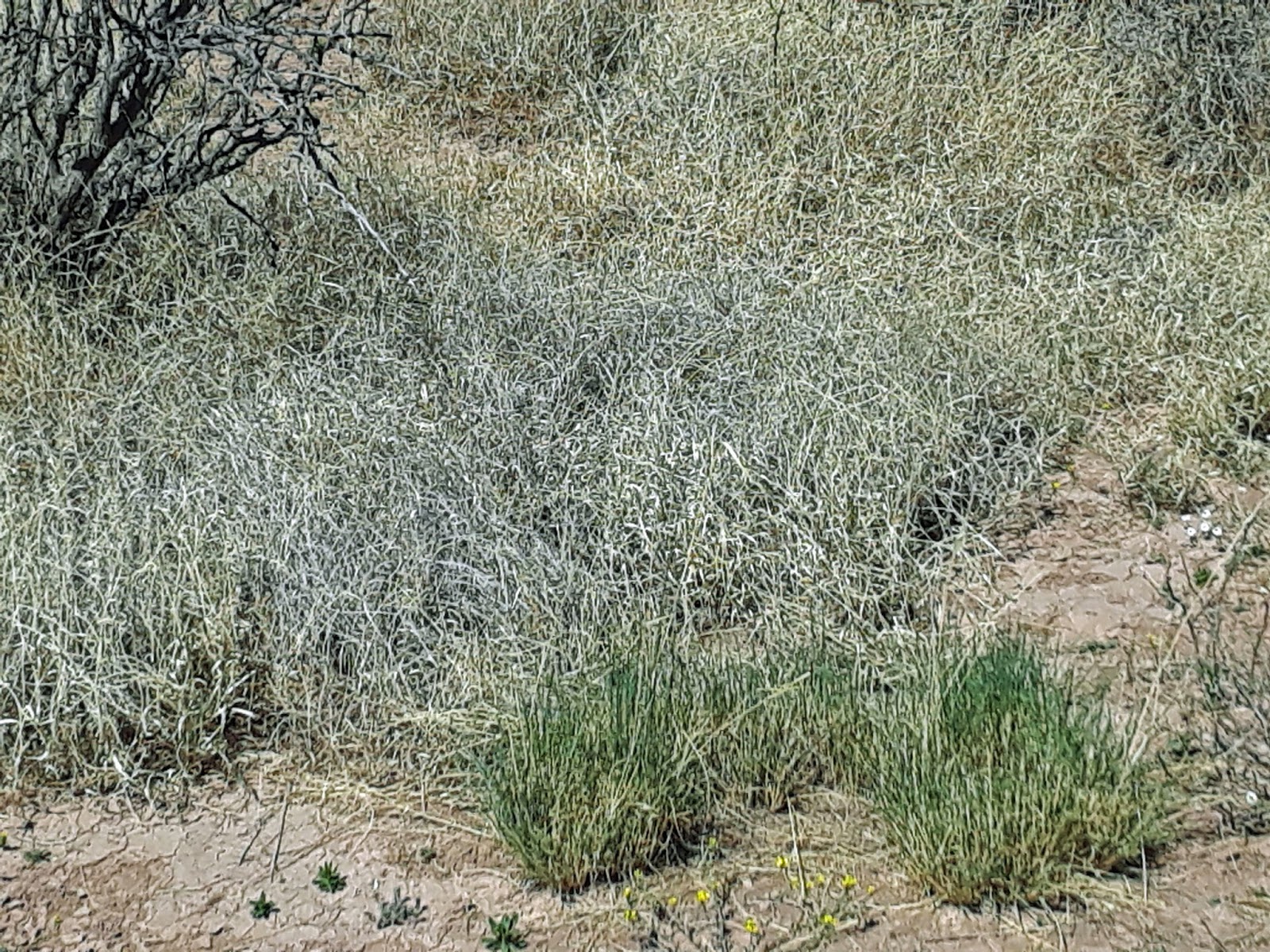
All of these pictures were taken the same day, in the same pasture. There are only 38 cows and a bull (plus calves) which get adjusted once a week at the most (and have gone up to 3 months without being adjusted when I am out of the area.) These pictures show the difference herd impact and proper grazing can have on the land.


At first glance, this picture is only showing a few weeds and wildflowers. The area happens to be in

an area where I stopped the cattle on one of the times they were moved. If you look close at the ground, you will see it is a combination of a smooth surface which is crusted so that the rain runs off it, and areas where that crust has been broken by the cattle so that more water is absorbed. Looking a little more closely, you will notice that the vast majority of the plants are in the area where the crust has been broken. The line between where the cattle were stopped for a short amount of time and where they didn't cross is clearly marked by the green
The picture below to the right shows the difference between plants which have been grazed (somewhat) properly, and those which have been over rested. The grey grass in the background is dying due to over rest, and a lack of being grazed. The grass in the foreground was grazed late in the season, and taken a bit shorter than I would like, it is green and growing because it was grazed despite the fact there has been less than a half inch of rain in the last 5 months. If this area would have had enough animal impact, and been grazed evenly, ALL the grass in this picture would be green and healthy rather than being oxidized and dying.vegetation.

This grass was grazed at the right height and given enough recovery time. Notice how the dormant grass is a golden yellow (signifying it is healthy and alive rather than dead) and the new growth is nearly a foot tall.

This last picture is an area which the cattle worked as a herd last year and grazed it properly. Once again, the dormant grass is a vibrant yellow instead of being dull, gray, and dead. This has allowed the grass to green up and thrive a month or more earlier than under grazed or overgrazed areas, despite the lack of rain. In addition, the herd impact of breaking the top crust has allowed weeds to emerge and begin the healing process on the bare ground.
Over resting the ground is as bad for the ground as overgrazing, and set stock, or simple rotational grazing results in both extremes. For more resources on regenerating grass, visit the grass management resources page on Migratory Grazing
Saturday, February 25, 2017
Booking Dates for 2017 Low Stress Stockmanship Schools
Unlike most other low stress stockmanship schools, these are designed to let the students see, and take part in changing cattle behavior from grazing in small groups, to grazing together as a herd. This means the schools are five days long, At the end of the school, everyone has enough of a grasp on the different ways to start, turn and stop cattle with the least amount of stress possible.

 Because of the intensity of the classes, and the fact we are holding them in the pasture, rather than a smaller more controlled area, class size is limited to ten riders. Experience (in both attending and holding schools) has taught me it isn't a good idea for managers and owners to send employees without attending themselves. Too often cowboys feel they are being forced to learn something which they feel they already know. By management also attending, they are leading by example, which helps their crew want to learn, and allows management to know if the crew is correctly performing the stockmanship changes.

The days begin by saddling up and being in the cattle shortly after sunup and not leaving them until after they have been placed on their afternoon grazing placement. Between discussion, demonstration, doing, observing the attitude, behavioral changes and discussing that, students generally achieve enough understanding to actually start applying it when they go home.
 Because of the intensity of the classes, and the fact we are holding them in the pasture, rather than a smaller more controlled area, class size is limited to ten riders. Experience (in both attending and holding schools) has taught me it isn't a good idea for managers and owners to send employees without attending themselves. Too often cowboys feel they are being forced to learn something which they feel they already know. By management also attending, they are leading by example, which helps their crew want to learn, and allows management to know if the crew is correctly performing the stockmanship changes.
If you are interested in hosting a school in Mexico, contact Pedro Dominguez on Facebook. For schools in the USA and other countries email me. By inviting other ranches to attend, the overall cost will often be lower than attending a two day school with no hands on experience. For more information on what the methods are, visit my website or order my stockmanship video on Amazon. In the meantime, enjoy the teaser and trailer to the video below to get an idea of what you will learn in the school.
Friday, December 4, 2015
Herd Building on Jervoise Station (A study of being unprepared for the task)
There are not many worthwhile endeavors in life where one can fly by the seat of their pants without any planning and succeed. The Jervoise project has more than proven that point. Being in the economic situation they are (See my last post) one can understand cutting some corners.
The two things lacking at Jervoise (which are currently being remedied) are water infrastructure and crew. In order for cattle to retain the desire to work as a herd, all stress needs to be remove, and this includes the stress of competing for water. No matter how much flow a drinker may have, if cattle numbers are so great they are fighting to get a drink, the cattle will not remain together as a herd. This was a big problem on Jervoise. The second problem was a lack of crew.
A big part of instilling herd instinct is being able to have all of the cattle head out from water to graze in the same direction as a herd. This presented a problem as we seldom had as many as four people to keep track of over three thousand head coming off of water in a timbered area. Despite that fact, the cattle did act as a herd...until we put them in a situation where they were stressed by having to wait in line for a drink. The problems of water and crew are being addressed and the plan is to try it again after the wet season. In the meantime, here is a video showing the basics of getting a large herd of cattle to acting as a single herd.
The two things lacking at Jervoise (which are currently being remedied) are water infrastructure and crew. In order for cattle to retain the desire to work as a herd, all stress needs to be remove, and this includes the stress of competing for water. No matter how much flow a drinker may have, if cattle numbers are so great they are fighting to get a drink, the cattle will not remain together as a herd. This was a big problem on Jervoise. The second problem was a lack of crew.
A big part of instilling herd instinct is being able to have all of the cattle head out from water to graze in the same direction as a herd. This presented a problem as we seldom had as many as four people to keep track of over three thousand head coming off of water in a timbered area. Despite that fact, the cattle did act as a herd...until we put them in a situation where they were stressed by having to wait in line for a drink. The problems of water and crew are being addressed and the plan is to try it again after the wet season. In the meantime, here is a video showing the basics of getting a large herd of cattle to acting as a single herd.
Wednesday, November 5, 2014
Allowing 2,200 Head Of Cattle To Act As A Herd
A recent stockmanship school in Australia allowed me to get much of the footage in this video. The herd included 2,200 head of branded Brahmas plus around 300 head of unbranded cattle. As participants in this school learned, instilling herd instinct is not a "recipe" you can describe. It is more a matter of changing how we handle cattle and allowing them to come together as a herd.
I need to give a special thanks to Rodger Savory and the folks at NQ Dry Tropics for making this video possible, as well as to my good friend Evelyn A Roper for the background music.
I need to give a special thanks to Rodger Savory and the folks at NQ Dry Tropics for making this video possible, as well as to my good friend Evelyn A Roper for the background music.
Wednesday, October 15, 2014
Using Cattle Instinct To Turn Them
One of the things we often forget when handling cattle is that we can use their instincts to our benefit. One of these instincts is for cattle to go around us. When sorting cattle out of a pen, or getting them to go to other cattle in the pasture most of us tend to go to the front of the cow to force them to turn. As this short video shows, this is not necessary. Using their instinct to go around us lets them turn and go without the stress of us getting in their face.
Sunday, August 4, 2013
Flerding Experiment
The Circle Ranch has asked me to develop a multi species herd (called a flerd) out of some of the animals on the ranch.The plan is to create a flerd by combining horses, longhorn cattle, lamas, alpacas and BLM burros.
The burros have not been handled, so the hardest part will be getting them into the pens. Last Tuesday I managed to get them from the Middle Pasture into a trap next to headquarters. To accomplish this I opened the gate I wanted them to go through and rode to the back of the pasture. As soon as I spotted the burros I stopped and stood there until they started moving away from me, then dropped out of site. There was a stud horse and two geldings at the gate when the burros reached it. When the stud made a short charge at the burros, I was far enough out that I loped in the same direction as the burros and managed to stop them. After nearly an hour of applying and releasing pressure a single step at a time, the burros left and the horses followed them through the gate. I continued acclimating them to seeing a person horseback for a couple of hours. When I decided they had enough for the day, I released them to walk down a fence. Unfortunately, when they reached the county road (and a cattle guard) the stud horse made another run at them, chasing them across the cattle guard, and following them into the next trap. I waited until things calmed down and removed the stud horse and his compadres to another pasture where they will be out of the way.
In the meantime, the rest of the flerd is beginning to shape up. There are peculiar challenges with this project, mainly with the alpacas and lamas. The males of these two species fight for dominance on a daily basis, which makes it difficult to combine groups of these species with each other, let alone other species. Interestingly enough, it seems that the neutered alpacas and lamas will still fight for dominance. To get around this I have removed the most aggressive males. They still fight, but the fights are a lot shorter.
In order to keep the stress levels as low as possible, I work these animals around a pen, or through several pens. Then I place the animals on feed in a separate pen. I cannot stress stress enough on how much stress is created by calling animals to feed. When we create the "Pavlov's Dog" response in animals the more aggressive animals are always on feed first leaving those lower in the pecking order to fight over what is left. Cattle which are grazing as a herd and acting as a herd will begin eating then scattering out after being fed because of the stress. However, by placing stock on feed this extra stress is removed. As you will see in the video below, the varied species in this flerd are beginning to eat with each other in only six days. This is largely because they are being placed on feed rather than going through the stress of the horses driving the cattle off feed and the cattle driving off the lamas and alpacas.
The burros have not been handled, so the hardest part will be getting them into the pens. Last Tuesday I managed to get them from the Middle Pasture into a trap next to headquarters. To accomplish this I opened the gate I wanted them to go through and rode to the back of the pasture. As soon as I spotted the burros I stopped and stood there until they started moving away from me, then dropped out of site. There was a stud horse and two geldings at the gate when the burros reached it. When the stud made a short charge at the burros, I was far enough out that I loped in the same direction as the burros and managed to stop them. After nearly an hour of applying and releasing pressure a single step at a time, the burros left and the horses followed them through the gate. I continued acclimating them to seeing a person horseback for a couple of hours. When I decided they had enough for the day, I released them to walk down a fence. Unfortunately, when they reached the county road (and a cattle guard) the stud horse made another run at them, chasing them across the cattle guard, and following them into the next trap. I waited until things calmed down and removed the stud horse and his compadres to another pasture where they will be out of the way.
In the meantime, the rest of the flerd is beginning to shape up. There are peculiar challenges with this project, mainly with the alpacas and lamas. The males of these two species fight for dominance on a daily basis, which makes it difficult to combine groups of these species with each other, let alone other species. Interestingly enough, it seems that the neutered alpacas and lamas will still fight for dominance. To get around this I have removed the most aggressive males. They still fight, but the fights are a lot shorter.
In order to keep the stress levels as low as possible, I work these animals around a pen, or through several pens. Then I place the animals on feed in a separate pen. I cannot stress stress enough on how much stress is created by calling animals to feed. When we create the "Pavlov's Dog" response in animals the more aggressive animals are always on feed first leaving those lower in the pecking order to fight over what is left. Cattle which are grazing as a herd and acting as a herd will begin eating then scattering out after being fed because of the stress. However, by placing stock on feed this extra stress is removed. As you will see in the video below, the varied species in this flerd are beginning to eat with each other in only six days. This is largely because they are being placed on feed rather than going through the stress of the horses driving the cattle off feed and the cattle driving off the lamas and alpacas.
Tuesday, June 18, 2013
Cowman Dressage
While "Cowboy Dressage" has turned into an arena event with no cattle, there is a reason behind doing dressage movements when working cattle. Holistic educator and low stress cattle handling clinician Guy Glosson has a saying, "You never get a second chance at a first approach."
While it is easy to make a mistake when approaching a cow to sort it off from the others, the real problem is not in the mistake, but in how we recover from it. In order to make a quick recovery, in a way that keeps the cattle calm. Having a horse that knows a little "Cowman Dressage" can go a long way in adjusting those first approach mistakes.
Handling cattle and riding a horse are two things which consist of a large amount of "intuitive feel." In order to be really good at either one, the more feel you have the better you will be. This feel is something most of us have to work at. We don't realize just how sensitive the the feel between us and the horses we ride can be. For those of us who are working cattle horseback, we often feel we don't have the time to work on it, but the fact is we pass up opportunities to work on our feel and focus nearly every time we get on a horse.
Day one of my clinics focus on developing feel and how to take advantage of our natural surroundings to build dressage movements in our horses. While we are doing this, we are also discussing cattle behavior and when to use different movements. Day two is applying these movements on cattle. These clinics are held in the pasture and limited to eight riders.
For more information on clinic dates, or to host a clinic, visit my main website.
While it is easy to make a mistake when approaching a cow to sort it off from the others, the real problem is not in the mistake, but in how we recover from it. In order to make a quick recovery, in a way that keeps the cattle calm. Having a horse that knows a little "Cowman Dressage" can go a long way in adjusting those first approach mistakes.
Handling cattle and riding a horse are two things which consist of a large amount of "intuitive feel." In order to be really good at either one, the more feel you have the better you will be. This feel is something most of us have to work at. We don't realize just how sensitive the the feel between us and the horses we ride can be. For those of us who are working cattle horseback, we often feel we don't have the time to work on it, but the fact is we pass up opportunities to work on our feel and focus nearly every time we get on a horse.
Day one of my clinics focus on developing feel and how to take advantage of our natural surroundings to build dressage movements in our horses. While we are doing this, we are also discussing cattle behavior and when to use different movements. Day two is applying these movements on cattle. These clinics are held in the pasture and limited to eight riders.
For more information on clinic dates, or to host a clinic, visit my main website.
Thursday, June 6, 2013
Interview on Low Stress Cattle Handling With Bob Kinford
Agricultural Insights interview 059 with Bob Kinford on low stress cattle handling. To attend or host a clinic by me, visit my website for more information.
Sunday, February 10, 2013
Observe, Ask and Analyze
Much of what we assume we know is a
result of how much we think (or don't think) about what we
experience. All of what we do with livestock is based on what our
past experiences have been. Until we change how we observe and
think about why animals react to us the way we do, we cannot make any
meaningful changes in how we do things.
Some reactions to my last post,
http://cowherdmanagement.blogspot.com/2013/01/if-bison-chased-horses-cattle-chased.html
are perfect examples. Several of them were up in arms. They threw out
examples of individual bison leaving a herd to chase horses and even
one which apparently broke into a pen to gore some horses. It would
not be reasonable to assume the entire human race violent based on
Charles Manson, Hitler and Stalin, so why do we do it with the
animals we handle?
It doesn't matter if we are working
with bison, elk, horse or (insert breed) of cattle, other than a few
individuals, their overall temperament and behavior relies heavily
upon how frequently and what methods are used in handling them. The
problem lies in the fact that when an animal does something we don't
like (such as charging a horse) people tend to look at the behavior
as an independent action rather than as a reaction to what we have
done. In our eyes we may have not done anything to warrant that (re)
action. However we need to take into account how the animal(s) have
been handled in the past that has instilled these behaviors into
them. I've run across people who own ranches (as opposed to ranchers)
who refuse to work cattle with horses because “horses make cattle
wild” or that horses are “too unpredictable and hard to handle.”
The simple fact is, as stockmen and horsemen, we need to not simply
acknowledge that an animal or group of animals is unruly or mean. We
need to observe when they are reacting in negative ways and be
introspective as to our actions immediately prior to the negative
behavior. In order to modify the behavior of our livestock, we must
first observe and recognize their behavior to the point we recognize
the negative behavior before it actually happens.
This philosophy of observing and
analyzing goes far beyond just improving the behavior of our
livestock. All too often the deterioration of our pastures is not
noticed until it is a borderline disaster. We need to continually
observe, and think about our observations.
The pasture I am in now appears to
have healthy grass from a distance. However there are large areas
that upon close observation have large amounts grass at the base
which are gray and matted. This makes me ask myself which would be
more beneficial; taking only a third of the grass as planned, or
taking more grass while breaking up more of the dead plants?
Another observation I have made
concerns water availability and predators. There is a theory that
having more water points makes it harder on predators than having
just a few “ambush” points. What I have observed is that there
are more coyotes in the pastures which have a higher number of water
points. Now that the observation has been made, we need to ask a
question and analyze it. The question is “does fewer water points
help predators by reducing ambush points, or does having more water
points simply support more packs of coyotes?”
For our ranching operations to be as
successful as possible, we need to observe, ask and analyze instead
of simply reacting without analyzing.
For more on my services visit Migratorygrazing.com. If you like humor, be sure to check out my humor
and cookbooks at 2lazy4U
Livestock & Literary Co.
Thursday, January 10, 2013
If Bison Chased Horses & Cattle Chased Rabbits
Why are equines the only grazing
animal which seemingly enjoys chasing and dominating other grazing
animals? This is a question which has baffled me for years (actually
decades) yet it is an important aspect of animal behavior that people
seem to miss. I bring this up because of a recent discussion on
bison.
I know there are a lot of people out
there who are going to counter with “My bison charge anyone on
horseback,” but the simple fact is, they aren't. If they were,
cutting horse trainers would not risk using bison to tune up show
horses worth tens, if not hundreds of thousand of dollars. So why
does a herd of bison “charge” people who are horseback?
Curiosity.
When confronted with something new,
grazing animals are generally either afraid or curious. If they are
afraid, they will watch cautiously or flee. If they are curious they
will go see what it is. If one or two of a group of grazing animals
get curious about something and start running towards it, the whole
herd will follow.
In the case of a horseman being “charged” by a bison herd, it is a case of a few of the animals being curious enough about something to run over to check it. The rest of the herd follows. The first thing that pops into the rider's mind is panic, which transfers immediately to the horse. Horse and rider vacate the premises with the bison following trying to see what the heck that strange thing is.
Cattle will do the same thing. A
person walking across a field full of yearling heifers who are not
used to seeing a person afoot, will come stampeding right up to the
person and if the person runs, they will keep following. If the
person stops, so do the heifers, but they may come close enough to
them to sniff them.
Once I had a steer in a little group
of five hundred that was insanely curious about rabbits. One morning
all five hundred were running around the pivot, as a herd. I could
see noting they were chasing so I rode to that pivot to check it out.
When I got there they were all stopped in a big circle. When I got to
the middle, the one steer was standing on a jack rabbit's leg while
he was licking it. Other than standing on a leg to pin it down the
steer was not doing anything aggressive towards the rabbit. On the
contrary, he was grooming it!
This was not a one time affair with
this steer. In the several months I had this group of cattle, I had
to move them back and forth across some desert ground to some remote
pivots. This steer was naturally in the lead, and whenever a rabbit
jumped up in front of him, he'd take off chasing the rabbit.
There is a similarity between the
rabbits being chased by that steer, and riders being chased by bison.
Instead of thinking about what was really going on, they both ran
like heck to get out of the way. All the bison are wanting to do is
check you out, and all that steer was wanting to do was give the
rabbit a bath.
The point to all of this is that bison
can be worked horseback. You have to put some thought into it and
acclimate them first. After all, if bison choused horses, Indians
would have ridden bison and lived in horse hide teepee.
Services I offer Humor, Horsemanship & Cookbooks I've written
Subscribe to:
Posts (Atom)