Wednesday, August 11, 2021

20 Month Mark of Van Horn Regenerative Grazing Project

 This project is on 3,500 acres in far west Texas. 1,900 acres had been previously farmed under center pivot irrigation with the remaining 1,600 acres being native desert. The pivots were used for intensive grazing between 2003 and 2009 with the pivots planted in Bermuda and fertilized with anhydrous ammonia. In June of 2009 the place was leased with an option to purchase to a couple of brothers who planned to raise high quality Teff grass which couldn't compete with the Bermuda. By 2011  the lease passed on to a crop farmer who annually sprayed chemical to kill the Bermuda. In 2017 they gave up the lease, which was picked up by another crop farmer in 2018, who planted, then ran out of money to irrigate and abandoned the place.  

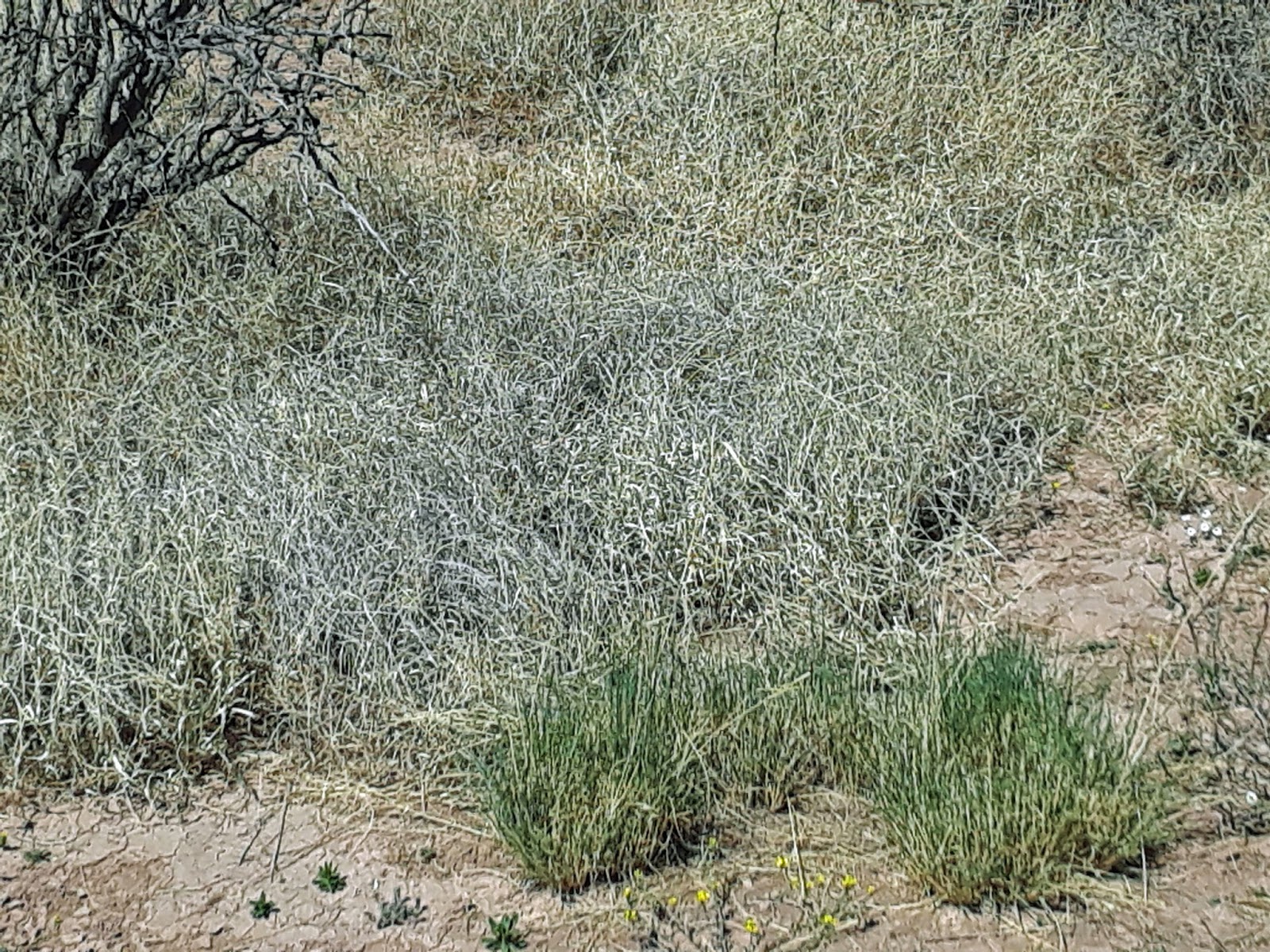
Late rains in 2019 brought on a bumper crop of tumbleweeds, at which time I was asked to see if I could graze them out in October of 2019. To graze it right would have required 1,000 calves for 4 to 5 months, but (not realizing dormant tumbleweeds can be 17% protein and 46% TDN) there weren't people interested.  I received 145 head of calves on November 3, averaging 435 pounds.As you can see in the picture below, it would have been impossible to just build temporary fences, so I rebooted their herd instinct and let them graze paths through the weedd. In January another 130 calves which were not weighed. The calves were shipped out on June 1,2020 with half of the first set averaging over 700 pounds, with no supplemental feeding. There were also 78 pregnant cows brought in on March 1st and shipped out on September 1st, then another 83 cows brought in on October 1st (of which 59 were shipped out in April. There were an additional 22 head of Corriente cows run seperate which were fed (on top of standing tumbleweeds) from October through June. 2020 saw an average rainfall of under 3", with no measurable precipitation between July of 2020 and the 24th of June 2021. Between June 24th, 2021 and July 15th, there was an average of 5" of rain across the entire property.  


As you can see from the above photograph, the tumbleweeds were dominant over the 11 abandoned pivots. With the low stocking rate, I was only able to get proper impact on parts of the pivots. As you can see, there is a big difference, mainly in the areas where I managed to get heavy enough impact by spraying year old tubleweeds with molasses.
The bare patches between the vegetation iswhere the tumbleweeds blew away. The vegetation is a combination of weeds, and grasses, mainly Bermuda, Japanese Millet, and Feathery Rhodes Grass. These are the areas which molasses was sprayed to make the tumbleweeds from 2019 paltable. The bare patches are where the tumbleweeds blew away.
Reading the ground to see how impact was distributed is easy in the above picture. Grasses and weeds are thickest where the most impact was. Lighter impact from grazing has a few weeds and no grass, while the areas the tumbleweeds blew away are bare. The lower picture is looking at another pasture, in an area the cattle tended to bed down together as a herd.
The next picture is on a flat in the 1,600 acre desert pasture in August of 2020. The tracks in this picture are the results of cattle walking back and forth between water and feed in a group.
This next picture is a wider view of the same flat on July 24,2021 after 5" of rain between June 24th and July 15th. In addition to several broadleaf weeds there is Bermuda, Feathery Rhodes Grass, Johnson Grass, and perinnial Rye.
The lack of cattle during the first 20 months of this project has left large piles of tumbleweeds. Now that it has greened up (and starting to rain again) I'm experimenting with wet burns. The next picture is of one the weed piles after receiving 0.4" of rain the night before. Too wet to burn in the morning, but by early afternoon dry enough to set on fire. As you can see in the bottom picture, there was enough moisture to keep it from burning to the ground, leaving ground cover, but taking enough so that the ground isn't completely protected from the sun. Last week I burned some dry piles, so next month will be able to compare the response difference between the two styles of burning.
The plan now is to wait until the tumbleweeds are mature and their protein levels drop to 20% and stock for the winter with between 600 and 1,000 calves, take them to 800 pounds then destock until the rains hit, and we see what the changes are.

Saturday, March 6, 2021

Raising Funds to Produce Stockmanship/Regenerative Grazing Video

 With Amazon discontinuing production of disc formatted video at the end of May, I have the options
of spending funds to convert Stockmanship 101 to a streaming format, or produce a new and
improved video. After careful consideration I have decided to go with the latter. As YouTube and
other sites now allow full length feature films, Stockmanship 102 will be free for anyone to watch.

I will once again be teaming up with Andy Horton of Malpache Media for this project. Rather than
working with a small herd that blends in with the desert brush, we will be rebooting herd instinct in
1,000 calves on green Oklahoma grass. Between the contrast, improved drones and cameras, this
video will be much more definitive than Stockmanship 101, and will cover more of the
horsemanship as well as grazing strategies. Individuals donating to the project will receive their names
in the credits, while non profits and companies will also have their logos displayed with link to their
websites. For more information on how to help with this project, please visit out GoFund page.


Friday, February 26, 2021

Stocking Rates Vs Grazing Days, Recovery Rates and Necessary Impact

People have asked why I like to look at grazing days over stocking rates. By converting from the traditional stocking values of AUM' (to grazing days) it gives us a more precise measurement of how much we have actually grazed, and a better idea of how to plan for the future, especially on diverse rangelands where we need to be flexible with our grazing plans. For example, the project I've been working on for just over a year, is in an area where, under conventional management, the stocking rates are between 90 and 100 acres per cow. Fiuring the higher stocking rate of 90 acres per cow, this would rate the 3,500 acres I'm working with at 38.8 cows or 466.6 AUM's.By multiplying the number of cows it is rated for by 365, we come up with 14,162 "grazing days." Approximately 1,200 acres of this property is abandoned farmland which when I took over management was dormant tumbleweeds. While most people look at dormant tumbleweeds as something with no feed value, the reality, shown in the forage test below, is that they retain a fair amount of feed value even a year later. The farm ground had contained center pivots, all but three fenced into quarter sections. 275 calves were cusotm grazed on five of these field for 151 days. Figuring a calf at 0.7 animal units, each day amounted to 192.5 grazing days for a total of 29,067 grazing days On March 1st, we brought in an additional 78 heavy cows and two bulls which were calved out, then the cows were sold on the 3rd of September. The 80 head for 125 days added an additional 10,000 grazing days for a total of 39,067 grazing days. The first of October, another 81 head of pregant cows were received. They browsed dormant tumbleweeds from 2020, as well as tumbleweeds left from 2019 which were sprayed with a 36% molasses for the remaining 92 days adding another 7,636 grazing days to the year, bringing the total to 46,703 grazing days. In addition there were 60 head of cows grazed on the dormant weeds for 45 days, before being supplemented with hay, adding another 2,700 grazing days for a total of 49,403 grazing days. While 3.448 times more than the local average grazing days, the numbers would have been much higher if the owner of the yearlings would have had the confidence to send more cattle. In order to graze and trample the 2019 tumbleweeds to make room for new plants, it would have required 1,000 calves for six months, which would have amounted to 126,000 grazing days (0.7 x 1,000= 700 grazing days per day, time 180 days.) In turn, this would have increased the amount of forage grown for the year, which couldn't grow through the previous year's crop of tumbleweeds. The fact that it was a drought year, makes it more interesting. Out of a 12 inch average rainfall, most of the property had well under 4 inches of rain, yet, by being flexible enough to graze different areas at optimum times, there was some stockpiled grass at the end of the year, as shown below. This picture also demonstrates the complexity of diversity and recovery rates.
This narrow view contains three different grasses which received roughly 3.8" of by the yellow color. The Tabosia is next in line, nearly a foot tall, but didn't develop a seed head. This is followed by Alkali Sacatone, which didn't have near enough time or moisture to to fully recover. Just out of this picture was a fourth species, volunteer Bermuda, which had only grown about a half an inch. This presents the conundrum(s) of when is the optimum time for the plants to be grazed, in terms of both being the most benefical to the plants, as well as nutritionally optimal for livestock. What is largley ignored, forgotten, or not realized by most holistic/regenerative grazers trying to mimic wild herds, is that those herds were not continuously in megaherds, grazing at ultra high densities. Other than when both water and feed were at the peak, the megaherds were disperesed into sub herds, which were grazing the plants which were at their highest nutritional levels at the time they were grazing an area. Also seldom mentioned is that bison were not the only large herds of herbivores on the great plains. There were also large herds of elk, antelope, and deer grazing across the same lands. Depending on the year, a piece of ground may have been grazed several times a year, with different plant species being grazed each time. Typical holistic/regenerative grazing programs, utilizing small temporaty fences and frequent moves (especially those which move daily, or several times daily) ignore the need of different plants at different times. Rebooting herd instinct, and using Instinctive Migratory Grazing (IMG) practices, grazers are able to adjust grazing patterns to take advantage of plant diversity which is optimum for both plants and animals. By adjusting in this way, you are allowed to run more cattle at a higher than "normal" density, determined by the cattle while providing more stockpiled grass, as explained by Riki Kremmers in this podcast.

Thursday, August 6, 2020

The Conundrum Of Proper Timing (and why small paddocks can prevent it)

While we are constantly reminded of the need for grazing at the proper time, good plant diversity assures that we are seldom going to have proper timing for all of the plants. At any point during the growing season we will have plants ready to be grazed, yet there will also be plants which are either past the "proper" stage to graze, or not yet there. The photo below demonstrates this. Some grass isn't close to optimum, some is, and others are actually done growing for the time being. 

This area was over 90% bare ground before I grazed this pasture with 275 calves last April and May. This is one of the areas the herd bedded down in for the night, and along with the help of a 2" rain early July, this is the result. Once all of the grass has seeded out, it will be grazed again to take advantage of the seed. When the whole pasture has this kind of diversity, rather than grazing it once, I will be able to graze it at least twice during the growing season (hitting some grasses at the optimum time both passes.)


The following picture is another area in the same pasture where the calves bedded down, giving the ground a super fertilization of dung and urine. Once again, this area was over 90% bare ground.


The ground in the following two pictures were predominantly Russian Thistle. It was grazed three weeks in March with 70 pair in March, followed by 275 calves for five weeks in April/May, then by 40 calves in July. This pasture has roughly an inch and a half of moisture since the first graze. Once again areas in which cattle bedded down are already beginning to grow grass.
This picture speaks loudly about the natural seed bank. In 2006, this was basically bare ground, mesquite, and creosote. That spring the brush was grubbed out and it was planted in Bermuda. Four years later, a farmer tried growing Teff grass for two years, then it was in cotton until 2018 when it was abandoned. There are two more areas of about the same size in this pasture which are looking to be about the same.
The problem with fencing large acreages into small paddocks (especially when starting a grazing project) is that as different plants reach that point of optimal grazing, they may be in small areas scattered through half the paddocks.  Often different species may be located in certain terrain which spreads through all of the paddocks in a pattern which may not give a whole day's grazing in any one paddock...yet have a week or more if you could follow the terrain. This situation can reoccur several times during a grazing season, and (over the course of the grazing season) may amount to a month or more grazing which we miss. Leaving the pastures larger, rebooting herd instinct and practicing IMG allows us to go back and spot graze grasses, as well as forbs or other browse. 

When we merely mimic a herd by rotating them through fences, we improve the soil and plant diversity, yet we forget that in the course of a grazing season, herds of several different species would graze across the same areas, taking whatever the optimum plants were at that time. By reducing the number of interior fences, and herding or using IMG, we are able to better balance the nutritional needs of our livestock with the optimum time of grazing various plant species for soil health.

Monday, October 14, 2019

Political Partisan of Climate Science...Long Live The Science, The Science is Dead,

There seems to be a tendency today for people to ridicule others for not accepting "settled science," even though science is never "settled." If science was settled, vaccines would have never been invented, nuclear energy (nor solar energy)  would have been developed. There would be no flying machines, computers or cell phones. Yet today we seem to have "settled science" at opposite ends of the spectrum. There seems to be little to no thought given to the point that perhaps both scientific models are wrong (after all, if we can't forecast tomorrow's weather accurately, how can we predict the climate 30 years from now?)  There also seems to be little thought as to why (or even how) science is divided upon political ideologies.

The science of the "left" claims their science is settled and we only have 12 years until the end of the world. Endless studies, graphs and charts prove them to be right. Anyone denying their claims are only deniers of science. Long live the science...the science is dead...long live the science.

The science of the "right"espouses that most of the climate change we are seeing is simply cyclic in nature, that man as little to nothing to do with it. Their graphs, models and studies on historical climate trends show us in a certain point in the cycle. If you don't agree with them, you are denying science and fear mongering to create a one world government.   Long live the science, the science is dead, long live the science.

The arrogance abounds in both sides of this discussion. The "right" is seemingly oblivious to the fact we have subtracted from (as well as added to) so many things to the environment that it is either naive or arrogant to believe we haven't affected the climate. On the left side, the science revolves around greenhouse gases.

You cannot have an accurate model, nor reach a scientific conclusion unless all of the variables affecting the outcome are included in the research, yet this is what both sides of the climate discussion are doing. Those on the right are ignoring all of the things we have been doing for the last 200 years, and those on the left ignoring things which are beyond the parameters of atmospheric gasses.

At 2.9 acres per mile of two lane road, plus airports, military installations and parking lots, we are pushing 100,000,000 acres (in the USA alone) reflecting heat back into the atmosphere in addition to disrupting soil hydrology....ignored by both sides of the "settled science" of climate change. This is ignored by both sides of the discussion.

Also ignored by both sides of the discussion is urban expansion and the flood control projects. Millions of acres heat reflecting buildings replacing carbon sequestering plants of all kinds, along with the flood control projects, not only replacing oxygen producing plants, but assuring that the "excess" water goes into waterways and eventually into the ocean rather than into the soil in the natural water cycle.

While the left side of the argument acknowledges the carbon emitted by air travel they fail to take into account how the heat and turbulence produced at high altitudes may affect weather patterns. (over 30,000 commercial flights a day, and with the larger planes creating so much turbulence single engine aircraft must wait for 7 minutes for the turbulence to die down enough for a safe take off) 

Last on my list (which may not be complete) is degradation of soil, otherwise known as "desertification." Despite the fact roughly two thirds of the world's land being in some stage of desertification, neither side acknowledges this to be a contributing factor to climate change, the left side incredibly considers it to be a "symptom" of climate change.  At 98 F ground temperature in healthy grass is only 78 degrees while on bare ground it is 128 degrees (and even hotter on the fore mentioned roads and parking lots...)  The fact the left doesn't take this into consideration as a cause of climate change is absolutely mind boggling.

I accept the fact we are effecting the global climate.  However, when the "settled science" posited by left fails to take all of the different contributing factors into account, how accurate can they be? When they don't just make claims, but change from global warming to global cooling, then, when their predictions fail, change it to simply "climate change,"  how accurate can their science be?

Some will label anyone who questions the politics behind climate change as a "science denier" or "climate skeptic" when in reality many of us are only questioning the motives behind the politics.

How do you believe in a "climate summit" which looks at a "carbon credit" system which allows polluters to pay someone already sequestering carbon  (because it is more profitable for them) without actually doing anything to reduce their own pollution?

How to you take a governmental body seriously which proposes taxes on eating meat as a preventative method of climate change when it has been scientifically proven time and again that more animals grazing in the proper manner builds soils and sequesters carbon from the atmosphere?

 If the UN and other governmental bodies were serious about controlling climate change why do they invite celebrities to give hysteria inspiring speeches  with no solutions rather than listening to groups like Soil 4 Climate or any of the Holistic management organizations out there?

Finally, if the media were actually serious, wouldn't every media out let there is be clamoring to interview people who have regenerated grasslands or improved soils at a profit through carbon sequestration? People like Alan Savory, Gabe Brown, Joel Salatin and Alejandro Carillos and Seth Itzkan should be in high demand in the media, but instead they are basically relegated to preaching to the choir.

Fear and hysteria may garner votes and high ratings, but without giving actual solutions it accomplishes nothing but geopolitical and socioeconomic indecision and divisiveness. If you want to actually solve problems, look at ALL of the causes instead of only a few. Above all, give credit where credit is due and use the people with proven solutions to educate both the general public and those on the ground who can actually implement the solutions.

Climate skepticism is rooted in the incomplete science of climate change. It is amplified by the unfulfilled prophecies of  global cooling, global warming and submerged cities. It is amplified by fear mongering  government bodies. It is also exacerbated by well meaning believers in the partisan politics of climate change who have solutions, yet let their emotions over ride logic in discussing any science which doesn't align perfectly with  their view. Science is always in a state of flux. Noting should be totally ignored nor should any science be totally accepted without looking at all of the variables. To not do so is not scientific.

Perhaps it is best put forth by physicist Richard Feynman who said "We have found it of paramount importance that in order to progress we must recognize our ignorance and leave room for doubt. Scientific knowledge is a body of statements of varying degrees of certainty — some most unsure, some nearly sure, but none absolutely certain."

Monday, September 16, 2019

Working Cow Podcast Interviews Wyoming Rancher on IMG

Sometimes I realize that to some, IMG (Instinctive Migratory Grazing) sounds so far out in left field that they think I sound crazier than a pet coon. However listening to Clay Conroy's interview of east Wyoming Rancher, Riki Kremmers, it sounds pretty logical. You can listen to the interview here

Sunday, August 25, 2019

Tall Grass Prairies?

Several months ago a well known stockmanship clinician mentioned being in Kansas and claiming the views were much like the first pioneers had. I resisted the urge to comment at the time, but as I have just finished working with the third ranch in "tall grass" country I can no longer resist that urge.

By all accounts, the grass was actually so tall a man on a horse couldn't see where he was going. Save for a few trees along stream banks, there were no trees, and even less brush. Compare that with what we have today. Even Big Blue stem grass is commonly under three foot tall. Draws close to creeks can be totally choked with trees as in this picture.
While forbes are part of a healthy ecosystem, they need to be balanced with a diverse amount of grasses. The point the tall grass country is in, with some areas entirely composed of weeds, and up to 40 or 50% of the mix in the "good grass" is a wake up call that the ecosystem is in decline, and will only degenerate faster unless we change our grazing methods. When you think of the pioneers coming through a sea of 5 to 7 foot tall grass, how can we think of what we have today as "tall grass prairie?
If the prairie was even in remotely the same condition as the pioneers saw it, you would have to have flags flying above your fences so you could know where it was. Instead conditions like the above picture are more common than not. The picture below is a fence line comparison between a client who has been practicing IMG for two years, so reversing these conditions isn't impossible.
As you can see, there is a distinct difference in not only the amount of grass from their neighbor on the left, but also in the height of the grass. Large parts of Kansas (as well as Nebraska and the Dakotas) are largely dependent upon dams and small streams to water their cattle. This means it is a perfect place to utilize IMG techniques so that cattle can migrate as a herd and create enough impact to improve soil health and the balance of our pastures while adding both height to these tall grass prairies without any added infrastructure . The picture below was taken at a school just outside of Council Grove, Kansas last week. All we did was point 1,300 to this draw when they came off of water (something which at this point, would be a one man job)
Because the nutritional value of the grass is declining at this time of year, the cattle tend to spread out, but are still grazing as a herd, selecting the highest value nutrition, which includes "inedible" weeds and grasses which conventional management tries to eradicate. These cows have been hitting Cord grass so hard the manager is sending in a sample to his boss to test it's nutritional value. 
While the cattle do spread out while following their grazing path, they also come to areas where, with no human guidance, they come into very tight groups such as this, which happened on the fourth day of the school.

The tall grass prairies need to be restored before they are completely destroyed, which judging by the amount of regression, and comparing it to the speed at which other areas have regressed when in this condition will be under thirty years, maybe in as little as twenty years. This can be reversed in five to ten years time using IMG methods to graze, without having to spend a dime in infrastructure costs, hiring full time herders, or even your current labor force needing to be in the cattle everyday.
For more information, visit migratorygrazing.com

Monday, May 20, 2019

Are Current Climate Models Incomplete And Therefore Inaccurate?

A couple of years back I published a post questioning how much humans were to blame for climate change. In it, I also touched on the question of why scientists consider desertification as a symptom rather than a driver of  man made climate change. Apparently these scientists consider roughly 293,000,000 acres of desertified ground between the southwestern United States and northern Mexico to be too minor of an issue to be anything more than a symptom of climate change (while ignoring similar desertified land masses on other continents.)

Current models measure air currents and atmospheric gasses while ignoring how ground conditions,ie: amount of forage on the ground also act as a driving force for upper air currents. These models also leave out the calculations for how much greenhouse gasses would be reduced if desertification was reversed worldwide.

Part of the curiosity stems from the facts that Sahara Desert has fossils of mega flora, and evidence of massive irrigation systems. I was told by one researcher that the only way climate scientists have been able to recreate the moisture needed for the kinds of fossils found, was to add the plants, and the moisture came. Nazca Peru, the driest place in the world, has ruins of irrigation systems, along with root systems four feet below the barren ground. In addition to these two situations, weather researchers have observed historical rainfall patterns changing in locations where a single farmer changes from conventional methods to no till, cover crop methods.

This begs the question as to the accuracy of current climate models which ignore desertification. Wouldn't climate models be more accurate if climate models also took into account ground temperatures from global desertification and water cycle changes from urbanization of large areas? Is it possible that grasses and vegetation drive upper air currents as much as atmospheric gasses? Considering not a single domesday prediction from the "settled science" based on current models has come close to occuring, it would seem that the incomplete climate models would be inaccurate. This leaves the possibility that most of man made climate change could be alleviated by simply regenerating lands which have become desertified.

For more information on reversing desertification visit http://migratorygrazing.com


Friday, May 10, 2019

Misguided Intentions

 Good intentions may be all but useless unless one takes a look at the whole before taking action. Such is the discussion about why the plan of the American Prairie Reserve is misguided. They fail to recognize that the prairies were not developed by bison alone, but also by migrating herds of elk and antelope. They also fail to recognize that both the instinct to graze as a herd as well as their instinct to migrate long distances has been dulled, if not removed from the way they have been run over the last 100 years. It would be possible for them to achieve their goals, but they must take the first step of recognizing that bison behavior of today is not the behavior which developed the prairies. This and more is discussed in this interview with me on the Working Cows Podcast.


Sunday, March 31, 2019

Are You Throwing Money Away On Supplemental Protein and Energy Supplements?

As you can tell from the picture, the country these cows are running in is "a little tough,"  yet they they are in this condition without any protein or energy supplements. The cow on the right below is 13 years old. The one on the left is her 2 year old daughter. How are they staying in this condition, under these conditions?

   Back in December of 2018 I posted about Using The Unseen Potential by utilizing browse plants not usually recognized as a feed source, and this is a good example of that. The brush in the picture below is called "Javelina Brush." Supposedly the only thing to eat is is javelinas and deer. 

Not only has this "inedible brush" kept the cattle in good shape through the winter (without depending on supplements) the browsing by cattle has stimulated new growth in them (which isn't happening in adjacent pastures) but has also stimulated new grass (which you can see in the bottom left of the picture.) 

The interesting part is that there was no "training" to get the cattle to eat these plants. All it took was was changing they way they were handled and they added the diversity to their diet on their own. They get handled no more than once a week, and at times go a month or more without being handled. 

Rebooting herd instinct has increased the diet diversity in virtually every herd it has been done one, and resulted in lowering or eliminating protein and energy supplements. For more information on how to reboot herd instinct to use in holistic/regenerative grazing programs without adding fences, visit my website

Tuesday, January 29, 2019

The Battle of Conflicting Instincts

While sometimes frustrating, I peruse through a lot of articles and videos on stockmanship, not for the education as much as trying to figure out how to describe things I do different. In doing so I came across a statement by one of the better known low stress stockmanship instructors which set off the old light bulb.

"Cattle don’t perceive there is or will be a release of pressure. Or pressure is coming from multiple spots around them at the same time."

 We are so busy figuring out when to apply or release pressure that we don't recognize that cattle are continually looking for the release of pressure, and when they don't recognize it, react to us in ways we consider "wrong."  To this (and in response to "pressure is coming from multiple spots around them" ) we need to add There are times we are placing pressures on cattle without realizing it.

We seldom acknowledge the fact we are neither solely a predator or solely a prey animal. This becomes a problem when we are working cattle because (no matter how much we try not to) we focus on what reactions cattle should have from the point of a predator, and not a prey animal. As such we don't recognize behaviors such as quitting the herd or refusing to go through a gate as the animal responding to too much pressure and recognizing where the release from pressure is.

Our reaction is that we need to get ahead of them to "get their eye" and put enough pressure on them to turn or stop them. We forget that the general rule of cattle slowing down when we are going in the same direction only works if and when our position isn't in the predatory mode of pursuing prey.

When it comes down to it, humans react much the same way. We react to having too much pressure in a variety of ways. This can vary from being indecisive, to becoming agitated and angry, to freezing up like a deer in the headlights. Just like a cow, our prey instincts kick in and we try to get away from it in various ways. We may freeze like a deer in the headlights, or we may be like a bull on the fight and go on the attack...or we may be like the cow in the gate and just leave. 

This tendency to looking for a release from pressure is why stockmanship methods using indirect pressure works so well. For instance, when trying to force a cow out of the feed pen and into the alley, the cow is concentrated on the source of pressure while thinking the release is where you picked it up from. As such it doesn't recognize the gate as the point of release, and keeps fighting to get back to it's safe place. By relieving pressure towards the gate and riding away from it, you have shifted your pressure towards her perceived point of release which shifts her into looking for a new point of release, which just happens to be the gate.

Once you begin to recognize how cattle perceive the your (or your horse's) body angle in relationship to your approach, you will be able to have cattle seeking the place you want them to go as their "point of release." We are able to take this to the degree of rebooting herd instinct, not because we are forcing the issue, but because the relief of stress creates the herd as their point of release.

For more videos, information on stockmanship, regenerative grazing,  as well as schools and clinics, visit   
http://migratorygrazing.com/


Friday, January 18, 2019

The Natural Way To Start Cattle With The Least Amount Of Stress

 It disturbs me when I see people writing articles on how to "properly" start cattle when they have attempted (and failed) to reboot herd instinct after asking for (and ignoring) my advice on the matter.
With that in mind, it is time to repost the following two videos. 

The first video is an animation which explains why there is stress in what many consider to be the "proper" way to start cattle, as well as the lower stress way of starting from the direction you want the cattle to go, and drawing them. 


The second video shows a group of cattle starting naturally on their own, along with a clip of me starting a group from the direction I'm wanting them to go. You will probably notice in the second video only one pass was made to start the cattle, making it less work on you as well as less stress on the cattle. For more videos and information on stockmanship and IMG (Instinctive Migratory Grazing) visit my website.


Tuesday, December 11, 2018

Using The Unseen Potential

Even when people believe they could change how they graze to regenerate their pastures, they believe that costs to make the changes in water infrastructure are insurmountable. Often this can be overcome in part by simple modifications.

 Many operations can simply consolidate their current water points to be able to run their cattle as one herd. (Santa Maria Cattle Company, out of Chihuahua City, Mexico has one 4,000 acre pasture they have been regenerating grass with only one water point, and one division fence.) In instances where there are two or more water points across the fence from each other, simply incorporating them into a single water lot will increase the number of cattle that can be run in a single group. 

 Another thing which goes unseen is the amount of feed which cattle ignore. There are many plants which our fathers or grandfathers depended on for winter forage which (thanks to generations of purchased supplements) that (most of) our cattle ignore them and we don't recognize them. Amazingly, in most cases (thanks to desertification of grass) these plants are more prolific now than they were back when our grandfathers depended on them. The following two pictures are looked at as unproductive by this ranch,  yet it is an opportunity waiting to be utilized.


The cattle in this picture were ones missed in the gather because they were buried in the brush in the top picture, rather than out in sparse grass like the rest of the cattle in this pasture were doing.
The piece of brush this cow is eating is one of four different kinds of brush they were eating. Doesn't look like much, but judging by the condition of the cattle, it must be pretty good feed...which is being all but ignored by most of the cattle and rancher alike.

These three things combined, being chronically understocked, ability to combine water points to run cattle in a single group, and ignored forage plants add up to the potential to not only begin a regenerative grazing program with little expense, but to do it at an accelerated rate.

Rebooting herd instinct in your cattle after combining your water points automatically widens their diet to include the nutritious woody plants and weeds they now ignore in a way which stimulates soil biology and grass. You are now grazing more forage in each pasture, as well a more acreage in each pasture and able to increase your stocking rates.

At this point, rather than buying cattle, you can increase your cow numbers and accelerate the process by leasing pasture to yearlings. With pasture rates for yearlings running at $20 per head, per month and above, you are left with (after deducting for extra labor and water) you are left with an extra $15,000 a month (or more) for water infrastructure, in addition to  sub-soiling or bale feeding to accelerate the soil and grass regeneration process.  

By changing focus, the unseen potential of your ranch can become more obvious, and regeneration of your soil and forage base becomes a bit more simple.


Saturday, October 20, 2018

Paradigms, Peregrine Falcons, and The Politics of Scientific Evidence

I've always loved acquiring knowledge, but learned at an early age that "facts" spread by research scientists and schools are not always true. Unfortunately, in order to succeed in school, and later in life, you aren't allowed to question the facts. You are indoctrinated to believe that any peer reviewed research is correct...but

You may have read the reading right, but are you sure the one who wrote the reading, wrote the reading right?

When I was in 8th grade there was a picture of a Peregrine falcon on the front page of the paper with a headline declaring that there were only four such birds left in the state of California. This surprised me as we had four of them flying around our house, and I was unaware that anyone had been in the neighborhood to count them. Curious, I called an uncle (who was a federal game warden) who informed me that I was mistaken, and the only such birds in the state were nearly 200 miles away, on the coast. A few weeks later he was visiting and admitted that the birds we had been watching were indeed Peregrine Falcons. The population of this bird had just increased by 100%, yet no public mention was made. Odds are, there were even more of them.

You may have read the reading right, but are you sure the one who wrote the reading, wrote the reading right?

The next year, the first chapter of my biology book stated that browsing animals preferred brush and twigs while cattle preferred grasses and legumes. Naturally (for me) I questioned the teacher about it the next day, because if this were true, deer wouldn't some out at night to graze on lawns and alfalfa fields while cows wouldn't be browsing on acorns, pine-nuts and brush. Of course the teacher corrected me and I received a "D" on my first test because my answers (based on personal observation) didn't agree with what was in the textbook.

You may have read the reading right, but are you sure the one who wrote the reading, wrote the reading right?

The conundrum of scientific "fact" not matching up to observations didn't stop there. A biologist who allegedly conducted a count of deer and elk on a ranch where I worked, concluded that there were no deer or elk on the ranch. I offered to show him two herds of does totaling over 70 head (not including fawns,)  at least a dozen mature bucks, not to mention a couple of small elk herds. Once again, he filed his report and the lie became truth. This was a smaller scale than the "endangered" desert tortoise which removed cattle from grazing permits (although, 70 miles away, in Las Vegas, construction companies had crews following earth moving equipment rescuing said "endangered species" by the tens of thousands...

You may have read the reading right, but are you sure the one who wrote the reading, wrote the reading right?

Now we come to holistic/regenerative grazing. As soon as Alan Savory claimed cattle could be used to regenerate grasslands, academia rushed to disprove it. Although he and others reclaimed millions of acres using his, or similar methods, academia continued to "disprove" his methods, often publishing new "peer reviewed" studies which were basically compiling "evidence" from other studies. For at least the last 80 years, the science behind range management has been peer reviewed opinion that degrading range conditions were the result of over grazing, with no thought given to plants dying from being under grazed, or consideration to the biology of the soils supporting the flora of the range.

Finally in the last few years some scientists are breaking out of the mold and discovering that holistic/regenerative grazing not only works, but that the science behind it is directly tied to the symbiotic relationship plants have with the biology in the soil in which they grow. The science which, so many have base their grazing paradigms on was wrong... Science is dead....Long live science.

You may have read the reading right, but are you sure the one who wrote the reading, wrote the reading right?

Now we come to the current feedlot system of producing beef. Science claims that it is the most efficient model of beef production. These claims are based upon the fact we are producing more pounds of beef with fewer resources. Once again, science has the peer reviewed studies, complete with tons of data to "prove" they are right. On a limited basis, without consideration to lands reverting to desert and bare ground, they may be right. However to reverse desertification (which is happening from Mexico, through the United States and into Canada) we need more cattle on the land. By staying with the present model, we are only accelerating the problem, which in a larger sense, isn't efficient at all. Ranchers who have successfully implemented regenerative grazing by any of it's names have often quadrupled their stocking rates while nearly eliminating runoff from precipitation (not to mention recovering dry springs, creeks and seasonal rivers.)

     You may have read the reading right, but are you sure the one who wrote the reading, wrote the reading right?

Who knows, perhaps I haven't written the reading right. Perhaps the range management science of the last 80 or so years, prescribing burning, herbicides and destocking have nothing to do with the spread of invasive plants, lowering ground water tables, and degradation of grass. But then again, someone once said that the definition of insanity was doing the same thing over and over and expecting different results.

For more information visit my website.

Thursday, August 30, 2018

Controlling Weeds Through Instinctive Migratory Grazing

Weed control. Radio advertisements in farm and ranch country are full of ones pushing weed control through chemical herbicides. Social media boards are full of discussions on how to control weeds by non-chemical methods including burning, grubbing and ripping. Often, at the same time ranchers are trying to figure out how to control the weeds, they are spending money on supplemental protein.  What if these weeds that "cattle won't eat" are the solution to reducing supplemental feed outputs?

As it turns out, the same stresses we have placed on our cattle that prevent them from acting as a herd, has also narrowed their natural dietary intake. As we change our stockmanship methods to allow the rebooting of herd instinct, cattle widen their diet, often before herd instinct is completely rebooted. A partial list of plants they begin to eat is common ragweed, ironweed, sumac, locust, thistles, blackberry bushes, chicory, and wild roses. The cattle don't just nibble on a few plants, but actually graze them hard.

The following picture is from a herd in Kansas which recently had it's herd instinct rebooted. The rancher call these "peppermint weeds." Prior to having their herd instinct rebooted, cattle wouldn't walk through these weeds, let alone graze them. Rather than grazing through spread out as we are used to, they migrated through as a herd, roughly consuming the top half of the plants on the right side of the picture.


Another weed this rancher has a problem with is hemp.  It was at a coarse stage and the cattle were not interested in grazing it. However, when the cattle were beginning to lie down for their morning rumination,  we spent a short time (perhaps 30 minutes) and drew them into a stand of hemp. After that one time, their preferred spot for their morning rumination is in the hemp. Even though they may not be eating it, they are trampling it down so that the grasses are able to start competing, as in the picture below (the hemp in this spot was head high to a man horseback.)


Other than one short session to entice the cattle to ruminate in the hemp, nothing was done to encourage the cattle to trample it, or browse the "peppermint" weeds. The cattle just started doing it on their own as soon as their stress levels were reduced enough for herd instinct to begin rebooting. The only thing that changed was the stockmanship methods of the man handling the cattle. The rest of it was simply the changes it allowed in the attitude of his cattle. They are working, doing weed control for the rancher, without spending a dime on chemicals, fencing or fire. As an added bonus, he is reducing his outputs on supplemental feed and was able to discard part of his water infrastructure.

For more information, visit http://migratorygrazing.com/


Saturday, August 25, 2018

Forensic Grazing Study

 Looking to the past to determine what we do in the future is as important years into regenerative grazing programs as it is in the beginning of them. When converting from conventional or rotational grazing to regenerative grazing, it is important for a person to recognize the grazing behavior that has caused their forage to degrade. It helps them to understand both the causes of the degradation as well as the cure. For those years into a program, it helps them identify areas which need changes in impact. A recent trip where I visited a ranch considering the change, and another which made the change several years ago are good examples.

The first ranch was starting to make the change, recognized the fact their pastures were going backwards, but weren't sure why. Rather than doing a grass survey, we did a Forensic Grazing Study. Rather than looking at the amount of grass, we examined what the grazing patterns had been under their conventional rotation. It was easy for them to see what areas had been over grazed as well as what areas had been under grazed. At the same time, this made it easy for them to understand the changes needed to begin regenerating the pasture, and how it could be done without added outputs for fencing or water (By rebooting their herd instinct and practicing IMG, they will actually be able to reduce their number of water points.)

The second ranch had been using a fencing system for several years. As the country was hilly, and fairly steep in areas, the cells were larger than normally used in these systems (500 acres and up.) While they had made dramatic progress over the last few years, the herd of 700 cows has not impacted the paddocks evenly. Cutting back and forth across the paddocks we were able to identify areas which had barely been impacted, along with areas were grasses were still receiving that second bite to retard plant recovery. There were some areas where there was oxidized litter preventing rain from reaching the ground, and some areas which had reached a plateau of recovery and starting to regress.

All of these things were discovered by crisscrossing the pasture horseback rather than driving through and conducting a grass survey.  His choices to improve his grazing distribution were to either build and maintain more fence, or reboot herd instinct in his cattle. That way, if cattle miss a spot while migrating around the pasture, he will be able to easily spot graze the places which need the additional impact without the headache of adding more "recreational fencing."

For more information, visit http://migratorygrazing.com/about 

Click to order the Stockmanship 101 dvd


Wednesday, August 22, 2018

Stress, Suicide, and Cattle Behavior

During a conversation with a friend last week, he received a phone call that changed the direction of our conversation. His friend that called was trying to figure out how to console his teen aged daughters who had a friend commit suicide. The girl had been outgoing and popular with a lot of friends. Outwardly she was happy and had everything to live for. Her friends and family had no idea that inside, she was a tortured soul.

We all miss signs that a family member, friend or acquaintence is under stress or depressed. Sometimes it can go on for years, especially if the person fails to acknowledge they have a problem. We begin to to accept the personality changes of people suffering from depression or stress as simply "that is the way they are" without questioning the changes in their behavior. Often we end friendships or marriages without realizing those people were suffereing from stress or depression, or even realizing the stress we are under because of their stress induced behavior.

So how does all of this relate to cattle behavior? It is basically one and the same. We look at cattle behavior as "that is just the way cattle are." We search pastures looking for all of the scattered out cattle without questioning why these supposedly herd animals do anything except graze together as a herd. We take it for granted that cattle don't eat weeds without questioning why they don't eat these plants which may have a higher nutritional value than grass. As long as the cattle are eating and not bouncing off the fences we consider them to be acting "normal" and not under stress. That is like observing prisoners of a concentration camp going through their routine and accepting it as normal, stress free behavior because they aren't rebelling...that the barbed wire and machine gun toting guards somehow alleviate stress and depression.

Wrapping our minds around the fact our cattle are stressed, and breaking stockmanship habits is the hardest part of releiving stress from our cattle. Once we accomplish that the changes in their behavior is nothing less than astounding. No longer do they repeatedly back graze the "sweet spots." They graze together as a herd, sometimes tighter than they do when being controlled by "recreational fencing," and begin to eat the weeds we control by spraying because the "cattle won't eat them."

The day before my friend's phone conversation, we worked with his cattle. He was close to having them working as a herd, and needed a few pointers. That one day resulted in his cattle not only coming together as a herd and grazing as a big swather, they were mowing down different varieties of weeds, and bedding down in hemp, all of which they were previously avoiding. In doing so they were opening up these areas so grass could grow, and trampling areas of hard packed ground so rain could penetrate the surface instead of running off. In short, by relieveing the stress he couldn't see, it changed the beavior of his cattle in ways he could barely imagine.
For more information on changing the behavior of your cattle for the better, visit MigratoryGrazing.com.

Sunday, April 29, 2018

Side By Side Animal Impact/Vegetation Comparisons

All of these pictures were taken the same day, in the same pasture. There are only 38 cows and a bull (plus calves) which get adjusted once a week at the most (and have gone up to 3 months without being adjusted when I am out of the area.) These pictures show the difference herd impact and proper grazing can have on the land.
At first glance, this picture is only showing a few weeds and wildflowers. The area happens to be in 
an area where I stopped the cattle on one of the times they were moved. If you look close at the ground, you will see it is a combination of a smooth surface which is crusted so that the rain runs off it, and areas where that crust has been broken by the cattle so that more water is absorbed. Looking a little more closely, you will notice that the vast majority of the plants are in the area where the crust has been broken. The line between where the cattle were stopped for a short amount of time and where they didn't cross is clearly marked by the green  


The picture below to the right shows the difference between plants which have been grazed (somewhat) properly, and those which have been over rested. The grey grass in the background is dying due to over rest, and a lack of being grazed. The grass in the foreground was grazed late in the season, and taken a bit shorter than I would like, it is green and growing because it was grazed despite the fact there has been less than a half inch of rain in the last 5 months. If this area would have had enough animal impact, and been grazed evenly, ALL the grass in this picture would be green and healthy rather than being oxidized and dying.vegetation.
This grass was grazed at the right height and given enough recovery time. Notice how the dormant grass is a golden yellow (signifying it is healthy and alive rather than dead) and the new growth is nearly a foot tall. 


This last picture is an area which the cattle worked as a herd last year and grazed it properly. Once again, the dormant grass is a vibrant yellow instead of being dull, gray, and dead. This has allowed the grass to green up and thrive a month or more earlier than under grazed or overgrazed areas, despite the lack of rain. In addition, the herd impact of breaking the top crust has allowed weeds to emerge and begin the healing process on the bare ground.
Over resting the ground is as bad for the ground as overgrazing, and set stock, or simple rotational grazing results in both extremes. For more resources on regenerating grass, visit the grass management resources page on Migratory Grazing

Tuesday, April 10, 2018

Working Cows Podcasts

I recently had the privilege of being interviewed by Clay Conry for his 24th podcast on  workingcows.net. This brainchild is turning into a wonderful series of podcasts from people in the industry including Fernando Falomir (who graciously suggested my interview), and better known people such as Doctor Trey Patterson, Dave Pratt, Aaron Berger, Jim Gerrish, and others. This is one series of podcasts that everyone in the ranching industry should subscribe to!

Friday, August 25, 2017

Cows Are Cows No Matter What "Special Circumstances" There Are

Cows are cows. No matter where you go in the world, people will use their terrain or genetics as the reason why they "have" to do things the way they do.  In the last couple of weeks I was privileged to give IMG schools at the Flying W Ranch out of Cedar Point, Kansas a second one on the Justin Rader Ranch for the Hemphill County Agrilife Committee. While the two operations were completely different, the herd instinct was close enough to complete in both herds that the ranchers should have no problem going forward, in spite of the fact the cattle were handled in the same way on both ranches.

The Flying W herd was in just over 2,000 acres, with several dams, and also draws with water. In day one, the herd was scattered, and would graze between stands of ironweed, ragweed, sumac, and locust without eating the grass within these stands, let alone browse the actual plants. By the last day, not only were the cattle grazing the grass in these weeds, they were also browsing them, as evidenced in this picture of where they bedded down on the 4th night.


At the end of the school we sent the cattle down a draw containing a lot of brush and weeds. They dropped into the draw and grazed their way to the other end, eating not only grass, but also brush and weeds. Although there were only 120 pair in this herd, the added density from their herd behavior increased the herd impact from a previous estimate of 10,000 pounds per acre to between 100,000 and 200,000 pounds per acre (depending on density of feed to pull the cattle together)


When the cattle were done with this draw, they began grazing back up the side of the hill, and for one last practice of taking cattle through the brush, we sent them through the top end of the draw and on a grazing path down the fence, where we ended the school. It is now going to be a simple process of placing the cattle to graze on the paths they want within the pasture to prevent re-grazing from taking place.

The second school outside Canadian, Texas was a completely different scenario. I stopped by the ranch to check on the situation on my way to the Flying W. The owner had begun multi paddock grazing and informed me that his cattle were drinking at noon and six pm (which I thought was an odd watering schedule.) The morning of my visit there were cows and calves in the waterlot, with cows outside the waterlot, and many (if not most) of the cows bawling, despite the fact no one was doing anything with them. After a few minutes, the cattle in the waterlot left to lay down and ruminate, while the rest of the cattle scattered out across their 20 acre paddock to resume grazing, as shown in the picture below.
They had turned the cattle into the 30 acre (CRP)paddock we would be working in the evening before the school began. Despite the fact the cattle had only been in the previous 30 acre paddock two days, they had already begun to take a second bite from plants while avoiding others as in the following picture.

While the cattle responded to the change in handling as the previous set in Kansas, there was a problem in getting them synchronized as a herd into drinking at the same time. The portable system only had a 40 gallon storage with a 10 gpm flow which meant the cattle were going to water at least 8 times a day. On the third day we turned off this system, and ran a hotwire across the end of the previous pasture so we could take them to it through the pens. On the fourth day they dropped from 8 times to water to one, with a few cows in between going to water on their own, yet returning to the herd. On the 5th morning when we were ready to change to the next 30 acre paddock, there was very little evidence of second bites being taken, as in the next picture. 


We had a concern when turning cattle into the next pasture that they might start re-grazing the first pasture as (on top of not being synchronized on a drinking schedule) they were having to go back through the first pasture to water, and past the only shade tree available. However the next morning, this is how they were grazing when I left.

After three days of travelling back and forth to water with no supervision the cattle began hanging up at the shade tree in the first pasture, then started back grazing, looser than desired but still following each other around the pasture. All in all, in spite of the lack of synchronization on water this wasn't a bad start. The next few pastures the cattle will not have to pass back through a pasture to water, and will have enough capacity for them to all water at one time. In the case the cattle are still not synchronized on water, after weaning he will be able to drylot the cattle for a day to take care of that problem. After that, it won't take much effort to complete herd instinct to the point they will migrate around his pastures to maximize his herd impact.

On an added note, a student from the Flying W school went home and successfully instilled herd instinct into the cattle he is working with. He let me know that because of the changes he has made in his techniques, that his last pasture move went smoother and easier by himself than it did when he had four people helping him.

Three different situations, with three different set of cows, all with different "problems," yet there was scarcely a difference in their end behavior. That is because cows are cows, and when you treat them right, the problems fade away. 
For more information, visit my website.