The following videos are from a discussion surrounding the fact that most federally controlled lands are un-constitutional as per Section 8, clause 17 of the U.S.Constitution. Included in the discussion is how to get these lands returned to the individual states as well as reaching out and educating the public on this issue and agriculture in general.
Monday, July 25, 2011


Thursday, July 7, 2011
Improve Forage & Hydrology By Grazing "Impossible" to Graze Locations
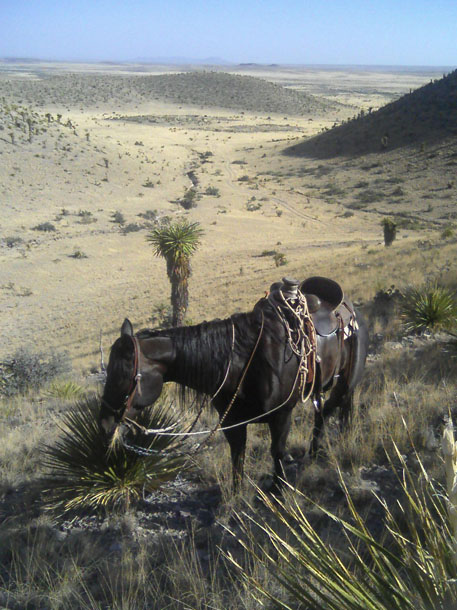 |
While the cattle were being rotated through the pasture in the picture to the left, they were, for the most part, allowed to graze where they wanted. You can tell where they grazed by following the outline of the healthy yellow grass. As soon as the ground began to get too steep, or too rocky, the cattle would ignore it in their grazing pattern.
Upon closer inspection of these rocky areas, there is grass, but it is gray, matted and very unhealthy.

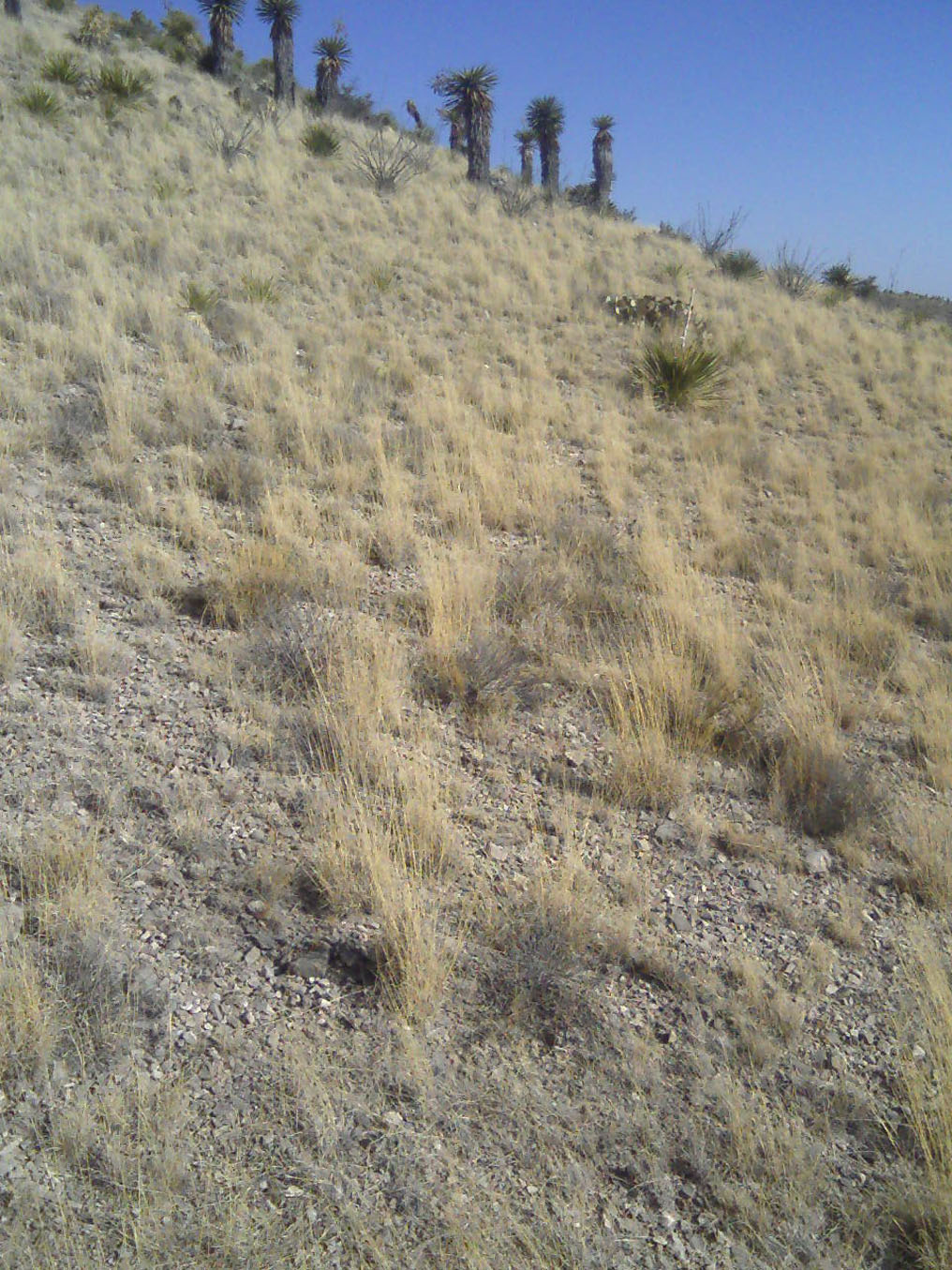
The results of this are in the picture below. Notice the grass is healthier and had much more growth than in the picture above. This is the result of grazing the cattle through this area one time. By utilizing "impossible to graze" slopes such as this you are improving biodiversity, hydrology, and stocking rates. At the very least, utilizing these areas will allow you to run at full capacity (as prescribed by conventional) methods while giving each grazing area once every two years. Feel free to ask questions or make comments below.
Wednesday, June 1, 2011
AgChat and the EPA
While participating on the May 31,2010 AgChat about the EPA I noticed a a tweet mentioning AgChat, with the comment that “The fear and hate being displayed remind me of “The Simpsons movie.” The ensuing “tweetersation” is what prompted this post.
Perhaps the hardest thing to do, is explain to a person how one of their most trusted friends has been lying to, and taking advantage of them. Even harder is trying to explain to a dedicated and concerned group of people, that an organization they trust has been taking advantage of their naivety to promote their own political agenda to the detriment of what they are supposedly protecting.
At the risk of having you not finish this post, I would like to introduce you to Dan Dagget. Mr. Daggett was one of the first 100 members of Earth First, and was instrumental in establishing a wilderness area in Arizona and in 1992 was designated by the Sierra Club as one of the top 100 grassroots environmental activists. I invite you to peruse his views and discoveries before finishing this post as a primer.
Now back to making my own point. The following three example of EPA actions demonstrates just how little scientific thought goes into their decision process. It also demonstrates their disregard for allowing the truth to emerge if it challenges the validity of their “environmental concerns.”
The first scenario was in the late 1980's. BLM was reducing grazing allotments in Nevada at the bequest of the EPA because of the endangered Desert Painted Tortoise. Livestock Market Digest columnist Lee Pitts uncovered the fact that during this same time, the National Guard “rescued” over 100,000 of these tortoises from a housing development near Las Vegas, Nevada and airlifted them to Reno, Nevada for “adoption.” This begs two questions; a) If they were actually endangered then why were there over 100,000 of them in an area being developed? b) Why would they adopt them out rather than relocate them where the cattle numbers were being reduced?
The second scenario was also in Nevada, in the late 80's.
Lahontan Cutthroat Trout were discovered on a BLM grazing lease. These trout had been listed as endangered in 1970 and reclassified as threatened in 1975. Armed with no scientific evidence other than the trout were in the area where cattle were grazing, the EPA demanded that the BLM put a buffer area around the stream. The Fallon family had been grazing this BLM lease continuously for over 80 years and with no warning were suddenly forced to cut the size of their herd in half. One would think the prudent thing to do would have been to do a study on the population to see if perhaps the cattle were somehow benefiting the trout (logic would dictate that at the very least, coexisting with the cattle for 80 years there was no real harm being done by the cattle).
The third scenario is more commonly known as it basically destroyed the logging industry in the Pacific Northwest. When the EPA shut down logging in the area because of the Spotted Owl there were several things which never made it into the national media. There was more than one lie purported by the EPA. The EPA claimed that the spotted owls could only nest in old growth forest. Rather than halt logging only in the old growth forest, logging was also halted in the replanted areas. If the logging ban was decided on apolitical, scientific reasoning to save the owl, why was logging halted outside the alleged area of habitat of the owl? Yet the deception by the EPA (and media) goes deeper.
During the Spotted Owl controversy, the EPA kept insisting that the only place these birds could nest was in old growth timber. The surprising thing was the number of spotted owls found to be nesting in everything from younger trees, to power poles and fence posts. These pictures were published in various timber, livestock and farming publications, yet were never acknowledged by the EPA, ecological, animal welfare groups or the mainstream media.
The simple fact is that facts can be misconstrued to promote a political agenda. A well written lie can often make more sense to a person than the truth. This is especially true when that lie is fabricated to appear it is protecting you. When you see a question on AgChat, or statement on Twitter you feel is biased or false, question the person who wrote it with an open mind. Don't assume that just because it does not fit into the mold of what you have been taught, that it is false. If you have any questions, feel free to ask in the comments below. If you want to discover more about agriculture, visit the Texas Crossroads Gathering's links page where we have a large variety of agricultural links!
Monday, May 23, 2011
Grazing Observations
This past week I had the opportunity to take a road trip through the drought ridden Texas Hill Country. This week I would like to share my observations and give some suggestions as to improving forage management. These suggestions will work in any part of the country.
Just by the fencing systems in place, it was easy to tell which places were practicing rotational grazing, and which ones were grazing continuously. While the rotational grazing systems were in slightly better condition than continuous grazing systems, a few things stuck out like a Charlois bull in an Angus cowherd.
First, livestock in both groups are practicing selective grazing. Areas of pastures in both groups would be eaten down to bare ground, while other areas would contain grass that was nearly two feet tall.
The second thing which stuck out like that Charolis bull really surprised me. I expected to see cattle scattered out with each animal grazing (selectively) in its own direction. I did not expect to see that behavior in sheep! I have long been chided with the comment "Are you raising cattle or sheep?" because of the way my cattle graze in a mob like sheep (used to) do.
The third thing that stuck out was that the animals were avoiding the taller grass and grazing the areas which were already grazed to the ground. This was true both in areas being grazed rotaionally as well as continuously. To acheive optimal re-growth, we need to make sure that grasses are not grazed down to the ground. This means we need to leave several inches of grass behind during the growing season to stimulate growth. Allowing selective grazing which takes all of the grass in one area while leaving other areas untouched is not only what causes over grazing, it is also less efficient utilization of forage.
Most stockmen (incorrectly) assume that selective grazing comes with the territory. Then there are those who will try to eliminate it by strip grazing with temporary electric fence. While the latter will work, it increases labor inputs as well as fence maintenance inputs. However if we learn to take advantage of the natural instinct of grazing animals to act, and graze, as a herd, we will be able to eliminate selective grazing while adding no additional inputs on fencing.
The above observation of sheep grazing spread out like cattle is an indicator that they are being handled in the same way which has destroyed their instinct to graze as a herd. The hardest part of re-instilling this instinct is in accepting that we are to blame for it, and in changing our own methods of handling livestock. Depending on the class of livestock and how badly they have been handled over time, this instinct to graze as a herd can be established in under a week. For older herds which have always had a lot of stress when handled, it may take as long as six weeks. The benefits are well worth the effort with the elimination of selective grazing, elimination of extra fencing, higher gains from the reduction in stress as well as lower labor costs when it comes time for working cattle during branding, weaning or any other time. For more information on how cattle act as a herd, and how to get them started, visit my main website. If you would like to train your cattle to act as a herd, and would like help feel free to contact me.
Just by the fencing systems in place, it was easy to tell which places were practicing rotational grazing, and which ones were grazing continuously. While the rotational grazing systems were in slightly better condition than continuous grazing systems, a few things stuck out like a Charlois bull in an Angus cowherd.
First, livestock in both groups are practicing selective grazing. Areas of pastures in both groups would be eaten down to bare ground, while other areas would contain grass that was nearly two feet tall.
The second thing which stuck out like that Charolis bull really surprised me. I expected to see cattle scattered out with each animal grazing (selectively) in its own direction. I did not expect to see that behavior in sheep! I have long been chided with the comment "Are you raising cattle or sheep?" because of the way my cattle graze in a mob like sheep (used to) do.
The third thing that stuck out was that the animals were avoiding the taller grass and grazing the areas which were already grazed to the ground. This was true both in areas being grazed rotaionally as well as continuously. To acheive optimal re-growth, we need to make sure that grasses are not grazed down to the ground. This means we need to leave several inches of grass behind during the growing season to stimulate growth. Allowing selective grazing which takes all of the grass in one area while leaving other areas untouched is not only what causes over grazing, it is also less efficient utilization of forage.
Most stockmen (incorrectly) assume that selective grazing comes with the territory. Then there are those who will try to eliminate it by strip grazing with temporary electric fence. While the latter will work, it increases labor inputs as well as fence maintenance inputs. However if we learn to take advantage of the natural instinct of grazing animals to act, and graze, as a herd, we will be able to eliminate selective grazing while adding no additional inputs on fencing.
The above observation of sheep grazing spread out like cattle is an indicator that they are being handled in the same way which has destroyed their instinct to graze as a herd. The hardest part of re-instilling this instinct is in accepting that we are to blame for it, and in changing our own methods of handling livestock. Depending on the class of livestock and how badly they have been handled over time, this instinct to graze as a herd can be established in under a week. For older herds which have always had a lot of stress when handled, it may take as long as six weeks. The benefits are well worth the effort with the elimination of selective grazing, elimination of extra fencing, higher gains from the reduction in stress as well as lower labor costs when it comes time for working cattle during branding, weaning or any other time. For more information on how cattle act as a herd, and how to get them started, visit my main website. If you would like to train your cattle to act as a herd, and would like help feel free to contact me.
Tuesday, May 10, 2011
Heat Detection Manual & Record Book
Probably the hardest part of any artificial insemination program is keeping the cattle calm while pulling cattle to be bred. There are a few simple techniques concerning when we pull the cattle and how we handle them which can make heat detection a simple part of our AI program. I have combined instructions on how to pull your breeders without stressing them or yourself out, with a handy record keeping book.
Rather than being formatted like most pocket books, the records keeping portion of this book is designed to help with the legibility of records by giving more room to write. In the case you are both detecting heat and breeding, this handy book allows you to write down the cow was pulled, cow identification number and the number of the bull she is bred to.
This handy manual and records book is available for only $8 (US Shipping included)! If you are a semen dealer, or seedstock producer, we can put your logo on the cover for a nominal charge.

Rather than being formatted like most pocket books, the records keeping portion of this book is designed to help with the legibility of records by giving more room to write. In the case you are both detecting heat and breeding, this handy book allows you to write down the cow was pulled, cow identification number and the number of the bull she is bred to.
This handy manual and records book is available for only $8 (US Shipping included)! If you are a semen dealer, or seedstock producer, we can put your logo on the cover for a nominal charge.

Sunday, April 10, 2011
Technology And “OFS”
Between my eight year old son asking me “How did you do it back then Daddy,” and the #Agnerd hashtag on Twitter, I've been dwelling on the pros and cons of new technology. Looking at all of the technological advances within my lifetime, one may assume that I am nearing the century mark. Surprisingly enough, I haven't quite reach my 57th birthday. All of these advances have given me a severe case of OFS (Old Fart Syndrome) when I hear about new technology.
OFS comes from remembering when black and white television was the epitome of high tech household appliances. Until I was eleven years old, I had to pick up the receiver and tell the operator what number I wanted to call (My parents number was J-111). There were several other people on our “party line” so you had to wait until the neighbor was done talking before you could make your call. Cell phones with call waiting, call forwarding, conference calls, caller ID, voice mail, internet access or any of the other eighty odd thousand phone applications (we consider necessity) were science fiction.
Today is seems most people are not only dependent, but addicted to technology. OFS has me wondering where the balance is. Is all of this new technology making our jobs in the cattle industry more efficient, or is it just restructuring our workload in a way that alienates us from what we should be doing?
We have back tags which tell us that a cow has been in heat. Then we have ear tags which tell us that an animal is running a fever. We use portable electric fencing so we can control where our cattle graze. We use a siren to call them into feed, then once they are used to the siren, we use the Pavlov's Dog response to move them to fresh pasture. If we aren't calling them and baiting them with a feed truck, we fire up the four wheelers or helicopters so we can get the pasture move or gather done “faster.” OFS tells me a man on a horse is cheaper than a man in a helicopter and can handle the cattle cheaper and with less stress, but the techno addicts can't see that.
In the feedlot, we are using high tech antibiotics so we can mass treat cattle on arrival so we won't have to pull sick cattle in their first few days on feed (regardless of the fact over half wouldn't be getting sick in the first place). Then we use ear tags which tell us if cattle are running a fever or not by turning on a bright red light when cattle are running a fever. These high tech tools allow us to not just spend less time observing cattle but to hire less experienced labor as managers figure all the help has to do is pull the cattle by the tags rather than the symptoms.
Besides making us dependent on technology to keep our feedlot cattle healthy, it is adding to input costs rather than lowering them. Bud Williams has proven time after time that feedlots can reduce their antibiotic inputs, as well as morbidity and death losses by as much as 50% by simply changing the way cattle are handled. Wouldn't it make more sense to simply change the way we handle cattle than adding to input costs?
When it comes to education, rather than hands on experience, we take multiple choice tests on a computer hooked to the internet. It is actually possible to receive a diploma (through a university) in reduced stress cattle handling without ever seeing a cow up close and personnel. To make it even more interesting feedlots are making cattle handling videos and computerized classes available to teach their employees better cattle handling procedures.
Once again, OFS raises it's ugly head. Proper handling of cattle is largely an intuitive task. It becomes even more so when we put the cattle handler on the back of a horse. Thinking we are actually teaching people to become effective at reduced stress cattle handling is like having a pilot who has flown nothing but single engine planes a multiple choice test on the internet and turning them loose in a Stealth Bomber...It isn't going to work. The only way you can truly teach proper cattle handling is by a combination of instruction and closely watched hands on experience.
The amount of new technology we have, and the things we can do with it are pretty amazing. We do need learn to balance between the old and the new. We need to ask ourselves two simple questions to see if the new technology is actually beneficial, or if we are using it to satisfy our own techno-addiction.
1. Will it actually reduce input costs in the long run?
2. Is adding the the new technology the most cost effective way to achieve the end result?
If the answers to number one and two are yes, then perhaps the new technology would be something to use. If not, then we need to recognize that we are only feeding our own techno-addiction.
OFS comes from remembering when black and white television was the epitome of high tech household appliances. Until I was eleven years old, I had to pick up the receiver and tell the operator what number I wanted to call (My parents number was J-111). There were several other people on our “party line” so you had to wait until the neighbor was done talking before you could make your call. Cell phones with call waiting, call forwarding, conference calls, caller ID, voice mail, internet access or any of the other eighty odd thousand phone applications (we consider necessity) were science fiction.
Today is seems most people are not only dependent, but addicted to technology. OFS has me wondering where the balance is. Is all of this new technology making our jobs in the cattle industry more efficient, or is it just restructuring our workload in a way that alienates us from what we should be doing?
We have back tags which tell us that a cow has been in heat. Then we have ear tags which tell us that an animal is running a fever. We use portable electric fencing so we can control where our cattle graze. We use a siren to call them into feed, then once they are used to the siren, we use the Pavlov's Dog response to move them to fresh pasture. If we aren't calling them and baiting them with a feed truck, we fire up the four wheelers or helicopters so we can get the pasture move or gather done “faster.” OFS tells me a man on a horse is cheaper than a man in a helicopter and can handle the cattle cheaper and with less stress, but the techno addicts can't see that.
In the feedlot, we are using high tech antibiotics so we can mass treat cattle on arrival so we won't have to pull sick cattle in their first few days on feed (regardless of the fact over half wouldn't be getting sick in the first place). Then we use ear tags which tell us if cattle are running a fever or not by turning on a bright red light when cattle are running a fever. These high tech tools allow us to not just spend less time observing cattle but to hire less experienced labor as managers figure all the help has to do is pull the cattle by the tags rather than the symptoms.
Besides making us dependent on technology to keep our feedlot cattle healthy, it is adding to input costs rather than lowering them. Bud Williams has proven time after time that feedlots can reduce their antibiotic inputs, as well as morbidity and death losses by as much as 50% by simply changing the way cattle are handled. Wouldn't it make more sense to simply change the way we handle cattle than adding to input costs?
When it comes to education, rather than hands on experience, we take multiple choice tests on a computer hooked to the internet. It is actually possible to receive a diploma (through a university) in reduced stress cattle handling without ever seeing a cow up close and personnel. To make it even more interesting feedlots are making cattle handling videos and computerized classes available to teach their employees better cattle handling procedures.
Once again, OFS raises it's ugly head. Proper handling of cattle is largely an intuitive task. It becomes even more so when we put the cattle handler on the back of a horse. Thinking we are actually teaching people to become effective at reduced stress cattle handling is like having a pilot who has flown nothing but single engine planes a multiple choice test on the internet and turning them loose in a Stealth Bomber...It isn't going to work. The only way you can truly teach proper cattle handling is by a combination of instruction and closely watched hands on experience.
The amount of new technology we have, and the things we can do with it are pretty amazing. We do need learn to balance between the old and the new. We need to ask ourselves two simple questions to see if the new technology is actually beneficial, or if we are using it to satisfy our own techno-addiction.
1. Will it actually reduce input costs in the long run?
2. Is adding the the new technology the most cost effective way to achieve the end result?
If the answers to number one and two are yes, then perhaps the new technology would be something to use. If not, then we need to recognize that we are only feeding our own techno-addiction.
Sunday, April 3, 2011
The Power of "I Can't"
"It doesn't matter if you say you can, or you say you can't, you're right."
Many years ago I read the above quote, and it stuck with me. I don't remember who the quote is attributed to, but the simple wisdom of it has stuck with me through the decades.This self fulfilling prophecy really applies when you are considering different management techniques.
In drought conditions like much of the southwest is currently under, ranchers are culling herds deep to save grass. When you mention following an intensive, rotational grazing program the first thing out of their mouth is usually "I can't." This is of course followed by a myriad or "reasons" as to why it will not work on their ranch. The "reasons" range from water systems to how rough their ranch is, or how much brush, to their kind of cattle.
This brings me to my own saying. The only difference between a really good reason, and a poor excuse, is if you are listening to, or telling it. The "reasons" you give after spouting off the phrase "I can't" are only the excuses you give for not trying methods which may keep you from reducing your herd in a drought. When the first reaction is "I can't" you are not thinking of the positive possibilities, but the things which will only hold you back.
Conversely, a person who says or thinks "I can" when approached with a new method to improve their situation will find a way to get it done. Again, this is a self fulfilling prophecy. When you say "I can" you are going to learn all you can about the new method so you can implement it for your situation.
The most efficient and effective way to manage your grazing at anytime is by herding your cattle through a holistic, intensive rotational program. You may need to make some changes in your water system, but for the most part the changes are rather simple, and relatively inexpensive for the benefits received. It will allow you to utilize grass more effectively, and in many cases allow you to graze areas of your ranch that usually aren't grazed at all. When the rains do come, this method will promote faster growth of grass, especially in tsabosa flats where the grass has become gray and matted.
Training your cattle to graze as a tight knit herd is simple. It is all a matter of whether you say "I can" or "I can't." If you want to keep your cow numbers up in this combination of drought and high prices, it may benefit you to adopt the "I can" philosophy!
Many years ago I read the above quote, and it stuck with me. I don't remember who the quote is attributed to, but the simple wisdom of it has stuck with me through the decades.This self fulfilling prophecy really applies when you are considering different management techniques.
In drought conditions like much of the southwest is currently under, ranchers are culling herds deep to save grass. When you mention following an intensive, rotational grazing program the first thing out of their mouth is usually "I can't." This is of course followed by a myriad or "reasons" as to why it will not work on their ranch. The "reasons" range from water systems to how rough their ranch is, or how much brush, to their kind of cattle.
This brings me to my own saying. The only difference between a really good reason, and a poor excuse, is if you are listening to, or telling it. The "reasons" you give after spouting off the phrase "I can't" are only the excuses you give for not trying methods which may keep you from reducing your herd in a drought. When the first reaction is "I can't" you are not thinking of the positive possibilities, but the things which will only hold you back.
Conversely, a person who says or thinks "I can" when approached with a new method to improve their situation will find a way to get it done. Again, this is a self fulfilling prophecy. When you say "I can" you are going to learn all you can about the new method so you can implement it for your situation.
The most efficient and effective way to manage your grazing at anytime is by herding your cattle through a holistic, intensive rotational program. You may need to make some changes in your water system, but for the most part the changes are rather simple, and relatively inexpensive for the benefits received. It will allow you to utilize grass more effectively, and in many cases allow you to graze areas of your ranch that usually aren't grazed at all. When the rains do come, this method will promote faster growth of grass, especially in tsabosa flats where the grass has become gray and matted.
Training your cattle to graze as a tight knit herd is simple. It is all a matter of whether you say "I can" or "I can't." If you want to keep your cow numbers up in this combination of drought and high prices, it may benefit you to adopt the "I can" philosophy!
Subscribe to:
Posts (Atom)